

Monthly Miscellany | April
Media roundup and recommendations

Welcome to my April miscellany!
Here lies a collection of thoughts on, and recommendations from, what I’ve been learning about, reading and watching this month. The miscellany is organised through action words: make, research, think, read, poetry, watch, essay, organise, forward.
This month spans manifestos, gazes, the decision to write, Woolf, memorising poetry, sunshine and listening as alchemy. Feel free to skim through, I hope you find something(s) of interest!
Section guide:
MAKE - A Manifesto (of sorts)
RESEARCH - How to paint a woman
THINK - Why we write
READ - Orlando: A Biography, Virginia Woolf
POETRY - Memorising a poem
WATCH - The Hunger Games
ESSAY - Bureau for Listening
ORGANISE - Notion tasks database
FORWARD - Spring!
MAKE - A Manifesto (of sorts)
This year, I’ve been collecting life lessons, quotes that have shaped my thinking, and fragments of wisdom in an ever-growing note on my phone. Each month, I revisit my journals, notebooks and scattered thoughts to gather up these pieces. After four months, a pattern has started to emerge: many of these ideas overlap, or at least reinforce one another. Gradually, a sort of personal philosophy has formed.
In April, I came across an Instagram post by Alexandra Apple - a series of distilled, big-idea statements woven into a kind of manifesto around creativity. She has since shared another exploring AI and humanity. It prompted me to reimagine my own collection of notes as something similar. Sort of a manifesto.
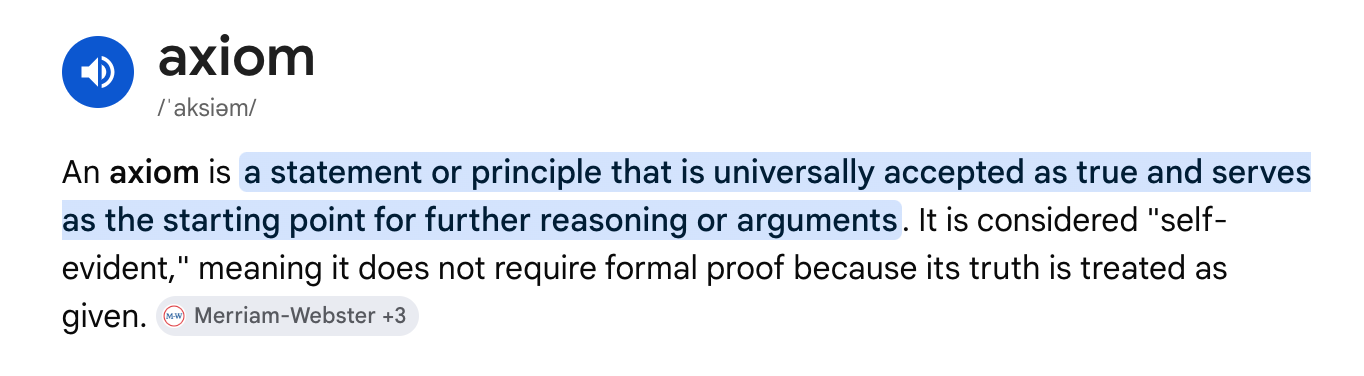
What emerged is a collection of guiding axioms. Some are my own, but most are borrowed from the thinkers I continue to return to. Many are attributed in shorthand, for example: ‘The only lasting truth is change (Octavia)’, or ‘Remain sceptical of the possible (Lucy)’.
I’ve been calling this piece A Manifesto (of sorts) because, while it shares the form - compact truths, reminders, provocations - it resists some of the usual expectations. It isn’t a structured essay, nor is it strictly linear, political, or argumentative. Editing it required a different approach from anything I’ve done before and was quite different to the typical essay writing process.
I may share this piece at some point. Let me know if that’s something you’d be interested in reading. It largely explores themes of self-trust, curiosity, creative practice and ethical presence.
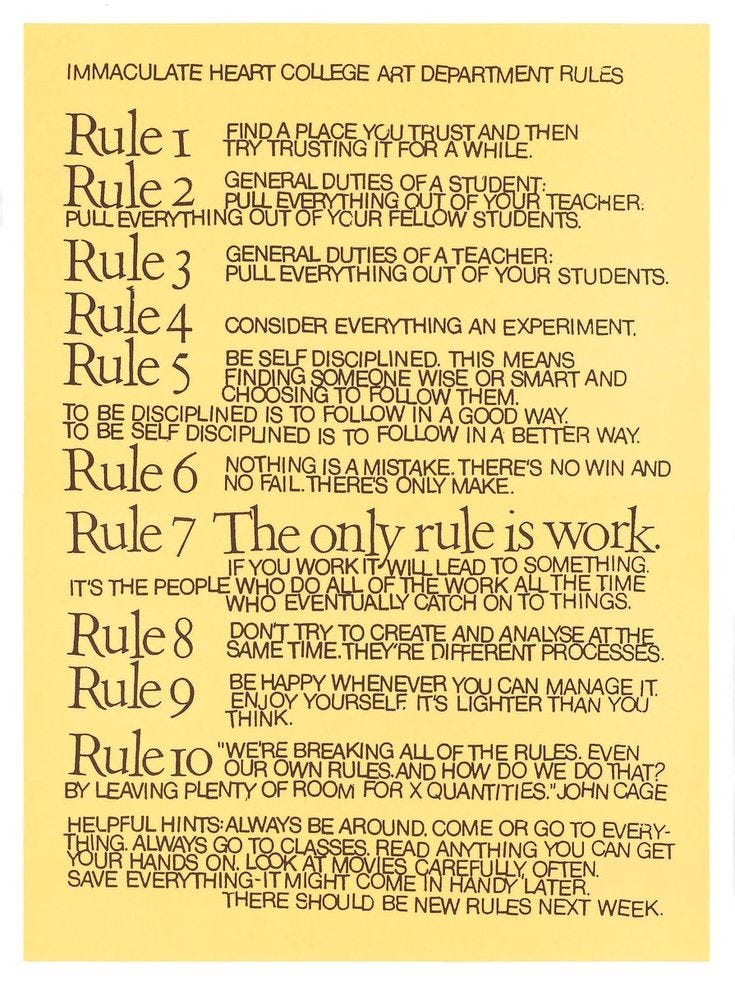
Working on A Manifesto (of sorts) made me curious about other creatives who have pushed and pulled the traditional concept out into new forms. The first source that comes to mind is the website Reading Design which I found when studying Theo Van Doesburg on my design degree. Reading Design is ‘an online archive of critical writing about design’. There are all sorts of manifestos and manifesto-like pieces of writing to be explored here: Joseph Albers, William Morris, Neville Brody etc etc. For something still arts related but less well-known-design-blokeish, I have to bring us into the realm of Sister Corita Kent’s 10 Rules. My favourite is absolutely ‘Rule 4 - Consider everything an experiment.’
RESEARCH - How to paint a woman
Before we begin this month’s research section, a brief note: this is a much longer piece of writing than usual. It draws together ideas that have accumulated over years of gallery-going and a sustained interest in women’s place within art history, which I began to bring into a single piece this April. I might develop this into a longer essay style piece at some point. It really is more of a research chasm than a rabbit hole. Brace yourself…
Most areas of research begin with questions. The questions that fuelled this inquiry have been forming for a long time, returning to me whenever I find myself within the high walls of a gallery space:
How have women been depicted in art under different gazes, narratives, and financial contexts? When did women begin painting? When did women begin depicting themselves? And, most fervently: what can these depictions teach us about how to paint a woman?
There are several entry points into the first of these questions. The first concerns the idea of the ‘gaze’. The term male gaze was coined by Laura Mulvey in her 1975 essay Visual Pleasure and Narrative Cinema. It describes how visual media objectifies women through a heterosexual male perspective, constructing women through a sense of ‘to-be-looked-at-ness’. In a video for The British Academy, Mulvey reflects on the essay, summarising:
‘‘Visual Pleasure and Narrative Cinema’ analysed the sexual politics of Hollywood film and argued, unsurprisingly, that the imbalance of power between men and women in society was reflected in an imbalance of power between men and women on the screen. But, as cinema is a supremely visual medium, these gender inequalities were necessarily inscribed into the visual style of cinema itself, and into how its stories were structured. It was not simply a matter of content, but of film form.’
The same can be said of the art world. The prevalence of the male gaze is evident not only in how women have been painted, but in how the role of the artist has historically been structured. This idea was explored around the same time by John Berger, who argued in Ways of Seeing that ‘men act and women appear’. Works such as Grande Odalisque (1814) and The Rokeby Venus (1647–1651) are used as examples of women positioned primarily as objects.
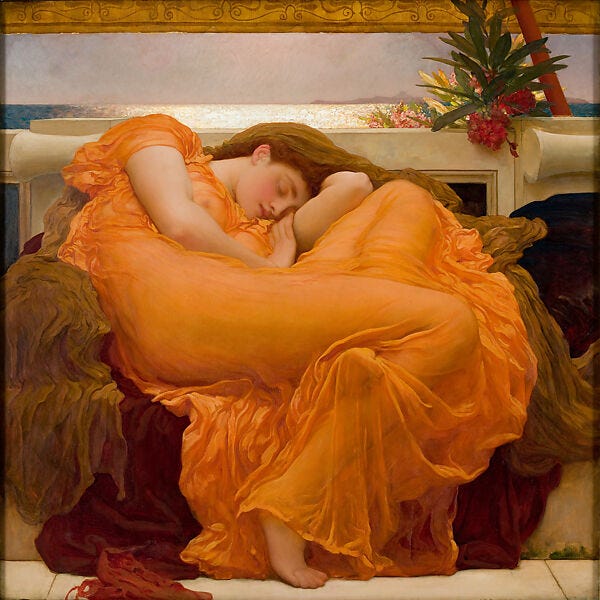
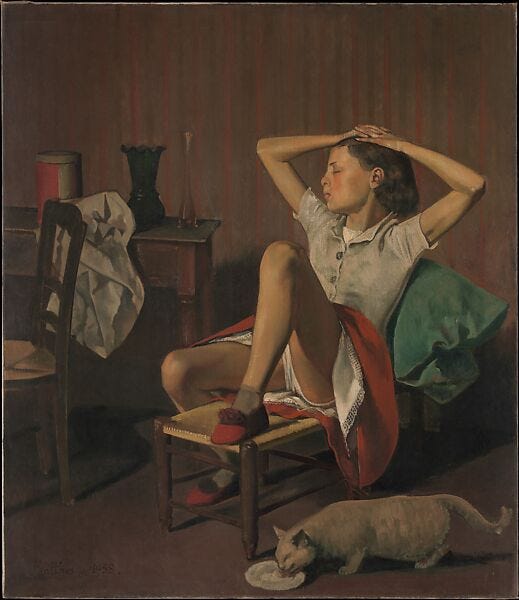
In my own experience as a viewer, there are depictions of women I find simultaneously deeply compelling and deeply uneasy. Two works I repeatedly return to are Flaming June and Thérèse Dreaming. I am drawn to their colour, atmosphere, and technical beauty, and yet I want to believe in the interiority of their subjects. It is here that a conundrum appears.
In Flaming June by Sir Frederic Leighton (1895), the sleeping figure seems entirely self-contained, absorbed in her own world rather than performing for the viewer. The painting is tender and still. However, it also belongs to a tradition of idealised female beauty made for visual pleasure. The woman exists simultaneously as a person and as an image.
In Thérèse Dreaming, this tension becomes more complicated. Painted by Balthus in 1938, the work has been widely contested for its depiction of a young girl in a pose often read as sexualised. In 2017, a petition called for its removal from the Metropolitan Museum of Art, arguing it romanticised objectification. Others defended it through artistic freedom and historical context. What interests me is not whether the painting is ‘good’ or ‘bad’, but why I remain compelled by it despite appreciating these critiques.
In her song Thérèse, Maya Hawke reflects on the figure with both empathy and discomfort, imagining her beyond the canvas rather than as a passive object trapped within it:
She empathizes with your feelings
She’s more interested in ceilingsIt’s tactless, it’s a test
It’s just Thérèse, it’s just Thérèse
Perhaps this captures the difficulty of looking at images of women produced within patriarchal traditions: the desire to see the subject as real collides with the awareness that the image is shaped by unequal dynamics of power and spectatorship.
During a visit to the Courtauld Gallery, these questions resurfaced. Moving through the floors - from Medieval and Early Renaissance works, through the Blavatnik Fine Rooms and European painting from 1400–1800, and into Impressionism - I began to wonder when a shift took place: when did artists move from working primarily on commission for patrons to choosing their own subjects? I have since referred to this as ‘art’s faultline’.
This month’s research invites yet another question: how did this faultline affect the depiction of women, and did it allow them greater autonomy? The system of patronage within which male artists operated encouraged the male gaze. Artists worked on commission for churches, monarchies, aristocrats and merchants, producing religious scenes, portraits, allegories and mythologies shaped by those who paid for them. In this sense, depictions of women were rarely neutral; they were structured by political and economic systems that determined both subject and form.
Yet women were not absent from artistic production before modernity. While often excluded from academies and formal training, they participated through forms historically categorised as ‘craft’: weaving, embroidery, pottery, textiles, manuscript illumination and domestic decoration. These practices offered creative and sometimes economic autonomy, even as they were undervalued in relation to painting and sculpture. The distinction between ‘art’ and ‘craft’ was itself gendered, shaping what was preserved and what was forgotten.
The question of when women began painting assumes an absence that is misleading. Evidence from prehistoric cave handprints suggests many were made by women, challenging assumptions about early image-making. From the outset, image-making may have been shared rather than gendered or even dominated by women.
In ancient cultures across Europe, the Middle East, and beyond, women appear not only as subjects but as makers, though rarely named. Classical references such as Pliny the Elder mention women painters in Greece, including Helena of Egypt. Across India and Africa, women’s artistic labour appears in textile production, pottery, basket weaving, and devotional image-making. These practices were highly sophisticated, yet rarely preserved within the hierarchies of ‘fine art’.
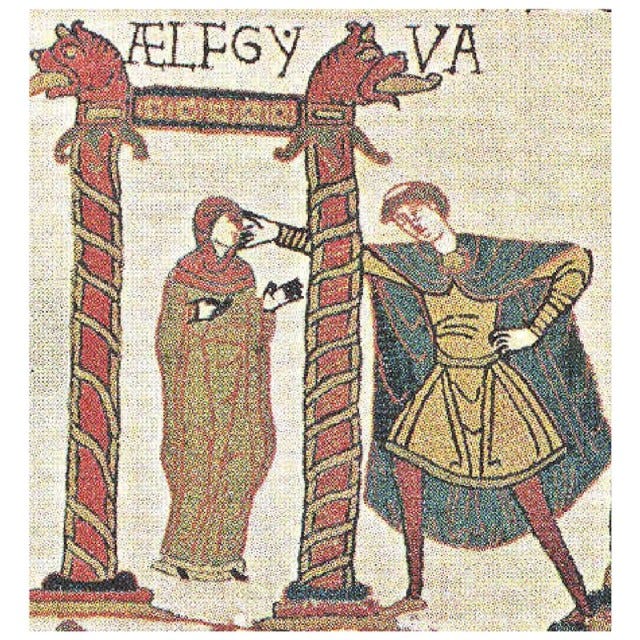
What emerges is less a timeline of women entering art than a pattern of their consistent participation within systems that have repeatedly failed to record or value their work in the same way as painting and sculpture.
Women continued to depict themselves throughout history, but when did they begin to do so with greater autonomy? This does not point to a single rupture, but to a gradual shift in who could make images, under what conditions, and for whom.
The ‘faultline’ emerges unevenly across the eighteenth and nineteenth centuries, as patronage loosens and image-making shifts towards a more market-driven and studio-based practice. As these systems shifted, so too did the possibilities for who could paint, what could be painted and how closely work needed to align with institutional expectations. It is within this reconfiguration, rather than a single moment of emancipation, that women’s self-representation began to take on new forms of visibility and control.
Now to my final question: how to paint a woman? To answer this as best I can, I’ll turn to works I have seen in person, and to one of the most significant exhibitions I have encountered: Radical! Women Artists and Modernism 1910–1950 at the Belvedere Palace in Vienna.
What stayed with me was not a single answer, but the range of strategies women artists developed to negotiate representation. The exhibition included around seventy artists, though I’ll focus here on two.
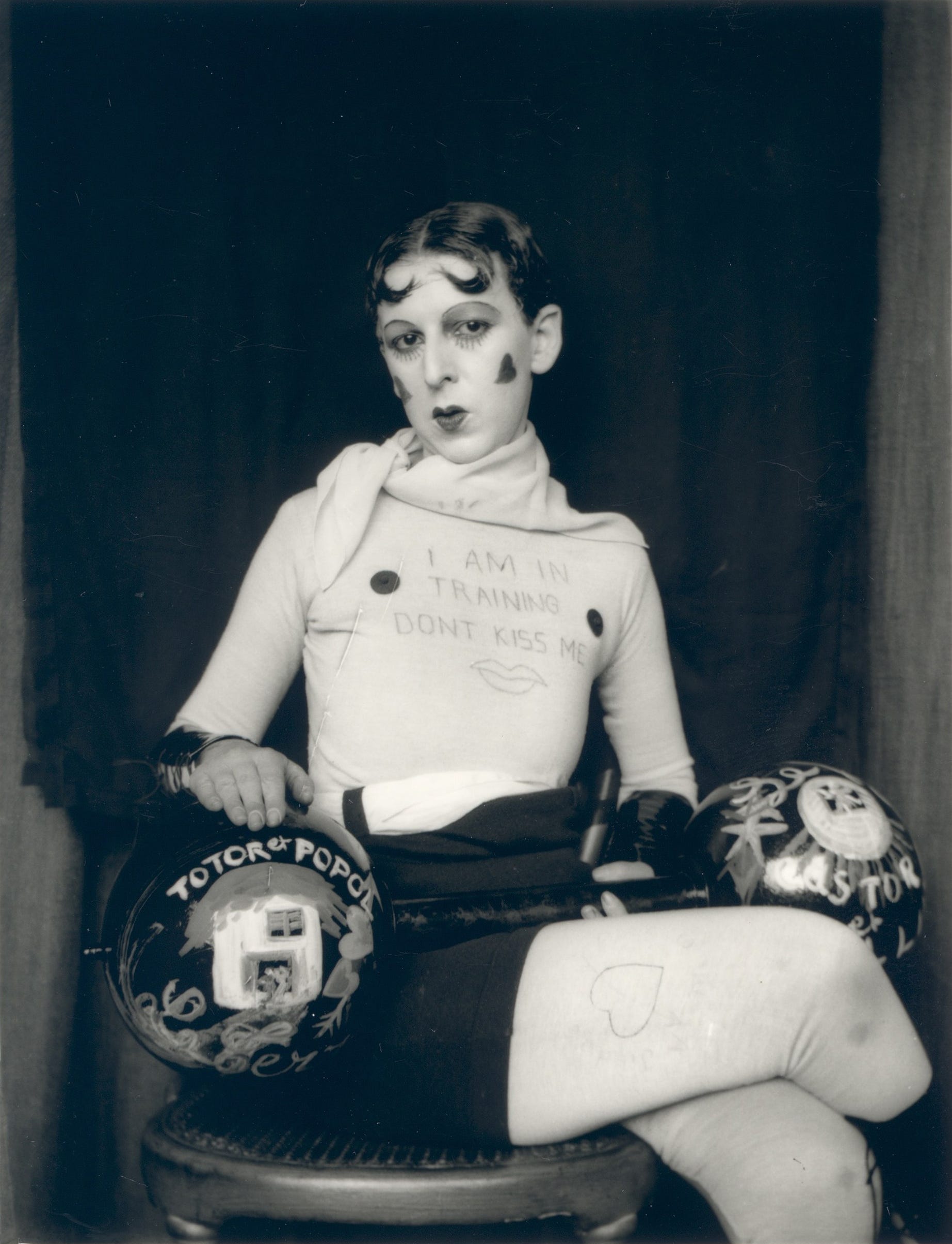

In Claude Cahun’s work, self-portraiture becomes unstable - identities are multiplied, disguised and unsettled. As you can see in I am in training, don’t kiss me (1927), Cahun’s work resists any fixed category of ‘woman’.
In contrast, Leonor Fini’s paintings stage female figures that are theatrical and autonomous, occupying mythic spaces. These depictions resist straightforward objectification while still engaging with the ‘gaze’.
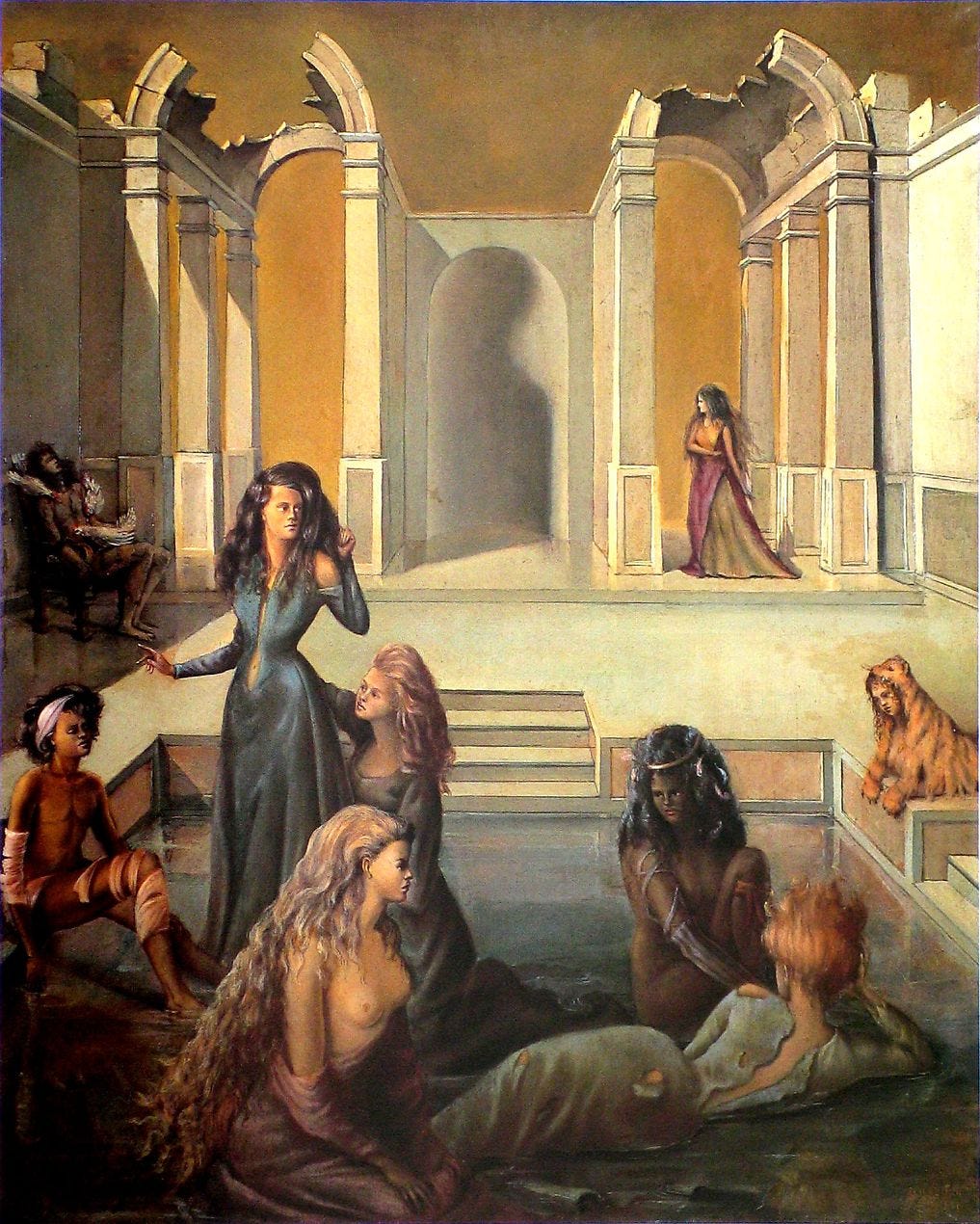
These works do not resolve the tension traced throughout this inquiry. In fact I am not sure how resolvable it is. Instead they expand it by - entirely knowingly - commenting on an art history overseen by the male gaze. Painting a woman is not a singular problem, but an ongoing negotiation between projection and self-definition.
I’d like to add that this research makes clear how contingent any understanding of art history is on access. I have been fortunate to lean into my questions through years of gallery visits, academic study, and living in cities where art is accessible. That privilege shapes the terms on which I have been able to ask and answer them.
THINK - Why we write
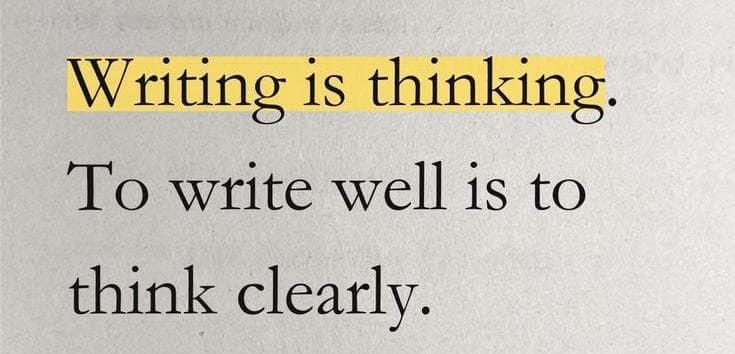
This month I kept returning to the question of why we write and, more specifically, the point at which we make the decision to write. In the face of the unknown or of struggle, we can embark upon many solutions. What separates the decision to write from, let’s say, the decision to think, discuss or learn about something is the decision to make permanent. And this making permanent is of something not yet fully understood, in the hope that it will begin to take on greater sense. The decision to write is intrinsically an acknowledgement of uncertainty. Flannery O’Connor, who I wrote about in February’s miscellany, put this most succinctly:
‘I write because I don’t know what I think until I read what I say.’
Indeed, writers write for many reasons and there are a wealth of perspectives on this topic, both online and in books. It seemed, the best way to expand my own thoughts on the decision to write would be to turn to some of these voices and see what resonates.
I particularly enjoyed Miriam Toews’ episode of The Shakespeare and Company Interview, Why We Write, Why We Live. I was entirely obsessed with her novel Women Talking and the subsequent film adaptation. Toews shares how she thinks of ‘home as a state of mind’ - ‘that the idea of going home maybe represents a little bit of clarity, like going back to childhood when you had a less layered, messy understanding of the world.’ In this clarity there is the possibility of ‘a really excellent conclusion’.
This thinking frames home as something non-fixed, more of a concept than a place. That concept easily translates to the practice of writing. Toews, who grew up in a Mennonite colony before moving at eighteen to Montreal and later London, often writes from the tension between departure and return to this notion of home. Writing becomes a way of constructing a home that is no longer geographical but intellectual and emotional - a space where contradiction and memory can exist long enough to be examined.
Perhaps we do not write to reach certainty but instead to return to a space in which uncertainty can become legible. The decision to write is the decision to remain with a question a little longer.
Another great interview I listened to this month was Elif Shafak on How I Write. Shafak urges writers to ‘read everything’, the more eclectic the better. She explains: ‘I’ve always believed in being intellectual nomads. We shouldn’t have comfort zones. I think the mind is always more nourished when we dare to leave our comfort zones.’
Similarly to Toews, Shafak’s early life involved movement across cultures and languages - born in Strasbourg, raised in Ankara and later living between Spain, Turkey and the UK. Her notion of the ‘intellectual nomad’ feels particularly resonant in relation to the decision to write because it frames curiosity as a kind of practice of displacement. Both Toews and Shafak treat writing as an active willingness to remain unsettled.
Returning to Flannery O’Connor - and given that in the next section of this miscellany I am going to discuss Virginia Woolf - I feel compelled to mention a fascinating Reel I came across. The creator argues that everyone is either a Woolf or an O’Connor. As a Virginia Woolf, you believe in ‘radical subjectivity’: the idea that ‘the primary ingredient for an authentic life and artistic expression is raw conscious experience’. In comparison, Flannery O’Connor ‘believed in the external power of revelation’; for her this was rooted in Catholic faith. O’Connor believed in choosing the correct lens through which to write, trusting that this lens would allow for clarity. Woolf, by contrast, would likely have seen any sort of imposed lens as an obstruction - whether social conventions, religion or political movements.
What interests me is that both positions still begin from uncertainty. Woolf turns inward, trusting experience itself as the source of meaning, whilst O’Connor looks outward towards systems of revelation and belief. Yet both write in order to uncover something not immediately accessible. Perhaps the decision to write always sits somewhere between observation and interpretation.
Despite their differences all of these authors first surrender to uncertainty to stand any chance at then shaping it into coherence. If the decision to write is the decision to invite uncertainty inside, there is evidently a deep vulnerability in the work of these writers.
‘For it is a curious fact that though human beings have such imperfect means of communication, that they can only say ‘good to eat’ when they mean ‘beautiful’ and the other way about, they will yet endure ridicule and misunderstanding rather than keep any experience to themselves.’
- Orlando: A Biography, Virginia Woolf
READ - Orlando: A Biography, Virginia Woolf
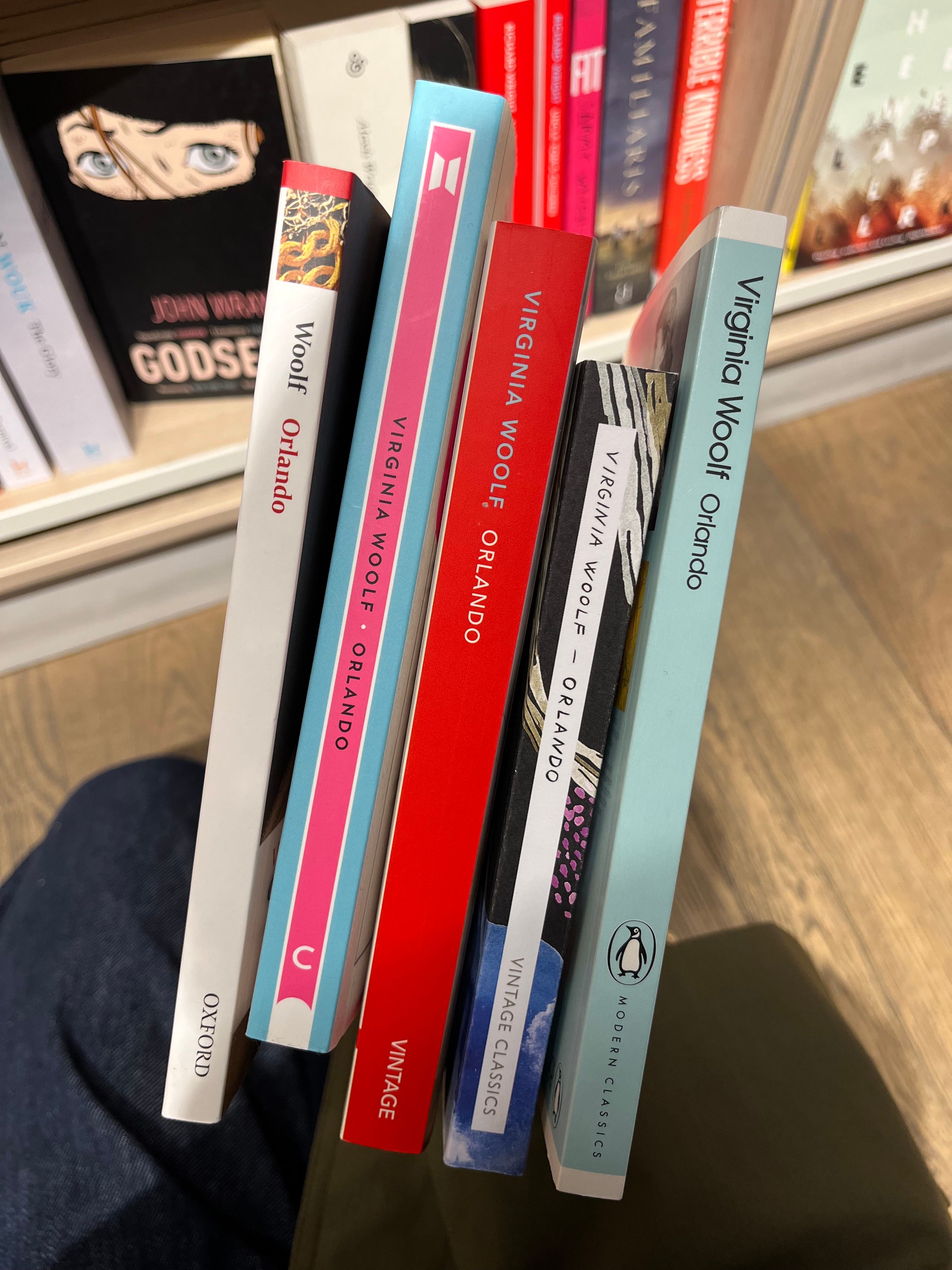
I’ve been listening to the audiobook of Virginia Woolf’s Orlando narrated by Claire Higgins and my goodness it is brilliant! I fear I will never approach reading, writing or basically anything else the same way ever again.
My prior understanding of Orlando comes only from the Sally Potter film adaptation (1992), which features the most captivating Tilda Swinton performance I personally have seen. Having watched this film, I sort of knew what to expect from the novel. Also listening to it in audiobook format definitely made the writing style easier to understand. Although some would say it’s best to go into reading fiction with no prior knowledge and the page is seen as a higher form than audio, for me, these foundations were nothing but helpful. In my mind they are not to be critiqued as access points.
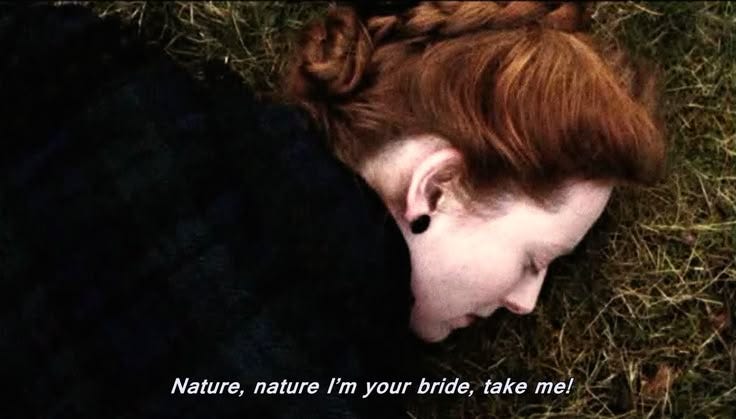
In short, Orlando: A Biography is a fantastical, satirical novel that recounts the life of an immortal poet who over three centuries ages only 36 years and changes gender from man to woman. The novel was written as a love letter to Vita Sackville-West who Woolf met through the Bloomsbury Group and subsequently had an affair with.
Orlando’s change of gender is at the centre of Woolf’s commentary on the place of women in society. In ‘Woolf’s Darkness: Embracing the Inexplicable’ - part of Rebecca Solnitt’s essay collection Men Explain Things to Me - she writes about liberation in Virginia Woolf’s work:
‘Woolf liberates the text, the imagination, the fictional character, and then demands that liberty for ourselves, most particularly for women. This gets to the crux of the Woolf that has been most exemplary for me: she is always celebrating a liberation that is not official, institutional, rational, but a matter of going beyond the familiar, the safe, the known into the broader world. Her demands for liberation for women were not merely so that they could do some of the institutional things men did (and women now do, too), but to have full freedom to roam, geographically and imaginatively.’
Commentary on women’s liberation is achieved in this novel through the distinction of Orlando as a man from Orlando as a woman. Because he was a man first (and a novel is read from front to back), the reader’s understanding of Orlando as a man lacks the context of Orlando as a woman and equally Orlando as a woman is entirely framed by the past Orlando as a man (read that again if need be).
I have to admit as a reader I was so caught up in the flamboyant freedoms Orlando as a man had, accepting them as part of his character, that I entirely overlooked the importance of his gender in these. It was not until the characters’ gender changed and these freedoms started to be revoked that I appreciated Woolf’s commentary.
As Solnitt outlines, the fact that Orlando’s initial freedoms go ‘beyond the familiar’ only serves to further highlight the disparity in the freedoms of the genders - for example, Orlando as a man is free to not only own a home but spend exorbitant amounts of his financial resources on lavishly decorating its 365 rooms while as a woman her property is questioned and her money sequestered. Solnitt suggests:
‘Perhaps the protagonist of her novel Orlando, who lives for centuries, slipping from one gender to another, embodies her ideal of absolute freedom to roam, in consciousness, romance, identity, and place.’
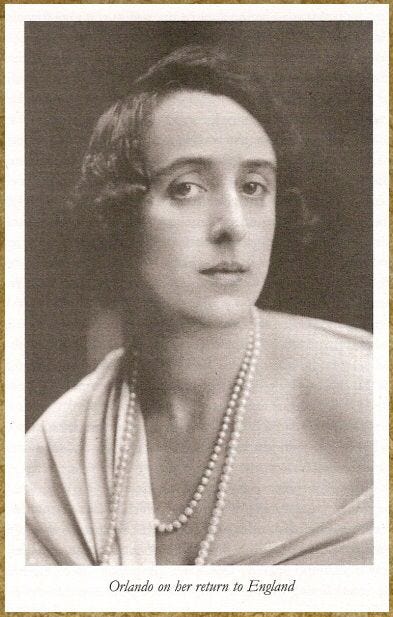
I personally really enjoyed Virginia Woolf’s writing style and could sense her playing with the written form - bending it to find sometimes deeper, sometimes more bizarre meaning. Abstract, experimental writing like this requires us as readers (or in my case listeners) to slow down and give over our full attention. It is a demanding task but an entirely rewarding one.
‘“I will write,” she had said, “what I enjoy writing”; and so had scratched out twenty-six volumes. Yet still, for all her travels and adventures and profound thinkings and turnings this way and that, she was only in process of fabrication. What the future might bring, Heaven only knew. Change was incessant, and change perhaps would never cease. High battlements of thought, habits that had seemed durable as stone, went down like shadows at the touch of another mind and left a naked sky and fresh stars twinkling in it.’
- Orlando: A Biography, Virginia Woolf
POETRY - Memorising a poem
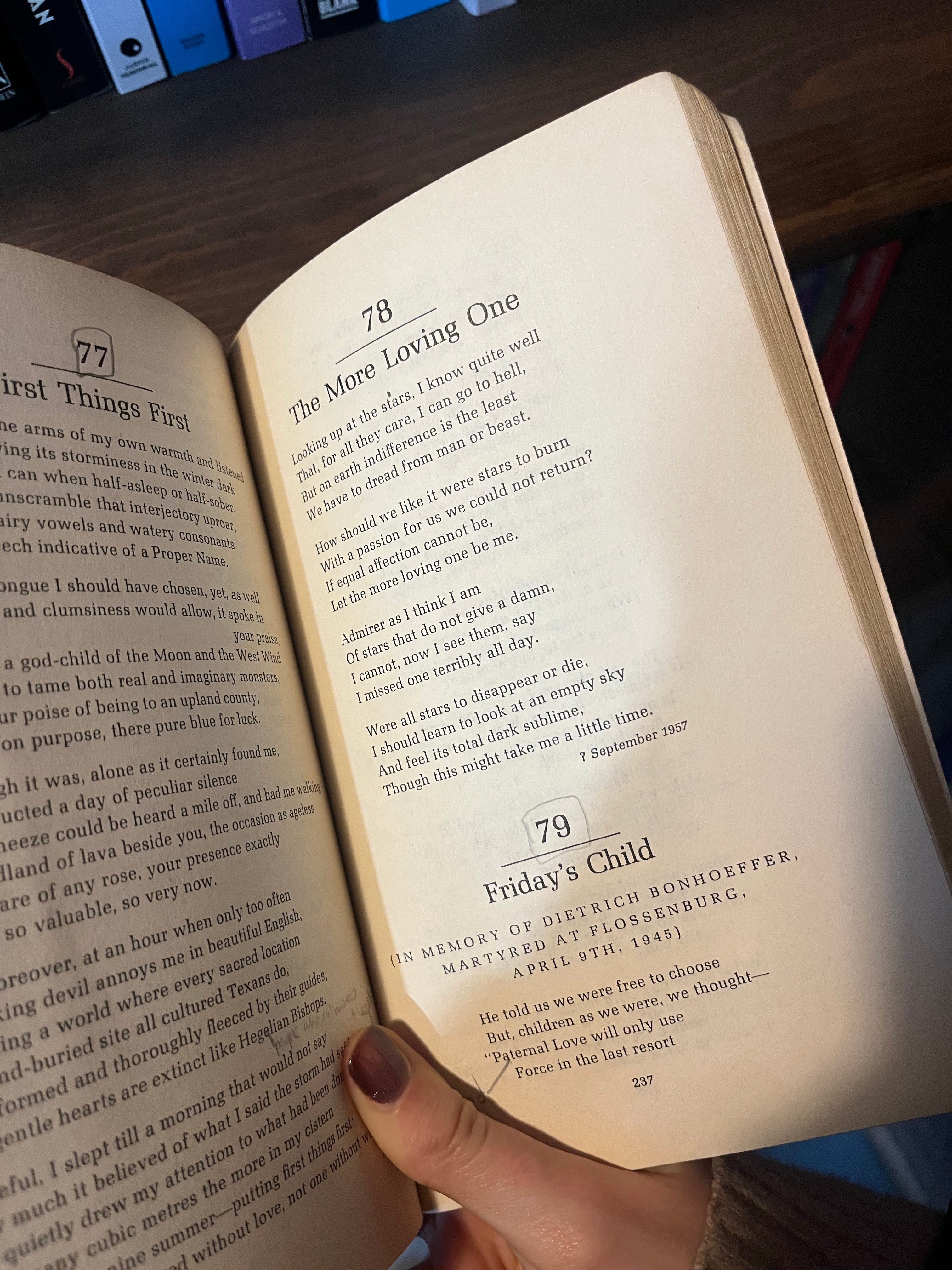
This month was National Poetry Month, and I really enjoyed following along with The New York Times poetry challenge. Over the course of a week they shared prompts and videos across their website and socials, encouraging readers to learn a poem by heart. Following along has also carried on some of the thinking about reading aloud that I wrote about in last month’s miscellany.
Let’s memorise a poem! Not because it’s good for us or because we think we should, but because it’s fun, a mental challenge with solid aesthetic reward.’
-@nytbooks
The More Loving One by W. H. Auden was written in 1957, placing it in the later part of the poet’s career. Compared with his earlier, more politically charged work, the poem turns instead towards unrequited love, loneliness and cosmic indifference. The NYT’s guidance drew on a few different memorisation techniques: gamifying the process, listening to famous readers perform the poem, reading along with Auden himself, learning a little about the poet’s life, and breaking the poem down into its epigrams.
If you fancy giving it a go, I’d recommend working through each day’s stage. (It sort of messes up the pages a bit but you can always bypass the NYT paywall by entering Reader Mode and most of the content is mirrored on instagram anyway.)
Memorising poetry takes reading aloud one step further. I hadn’t really tried to learn a poem by heart before this one. At the open mics I read at, there are often a few poets who perform entirely from memory, which is endlessly impressive, but it also creates a shift in the room that I’ve struggled to put my finger on. Reading from a page creates a slight barrier between the poet and the audience; speaking from memory seems to dissolve some of that distance. The poem becomes embodied rather than simply delivered.
There is also something to be said for memorisation as a way of learning more about how poetry works. Memorising The More Loving One had me thinking much more closely about the decisions W. H. Auden made and why they work so well. By taking the poem off the page and carrying it around in one’s own mind, you begin - to some extent - to inhabit the writing process itself. More than anything, though, the experience reminded me how pleasurable it can be to simply pay sustained attention to a creative work.
WATCH - The Hunger Games
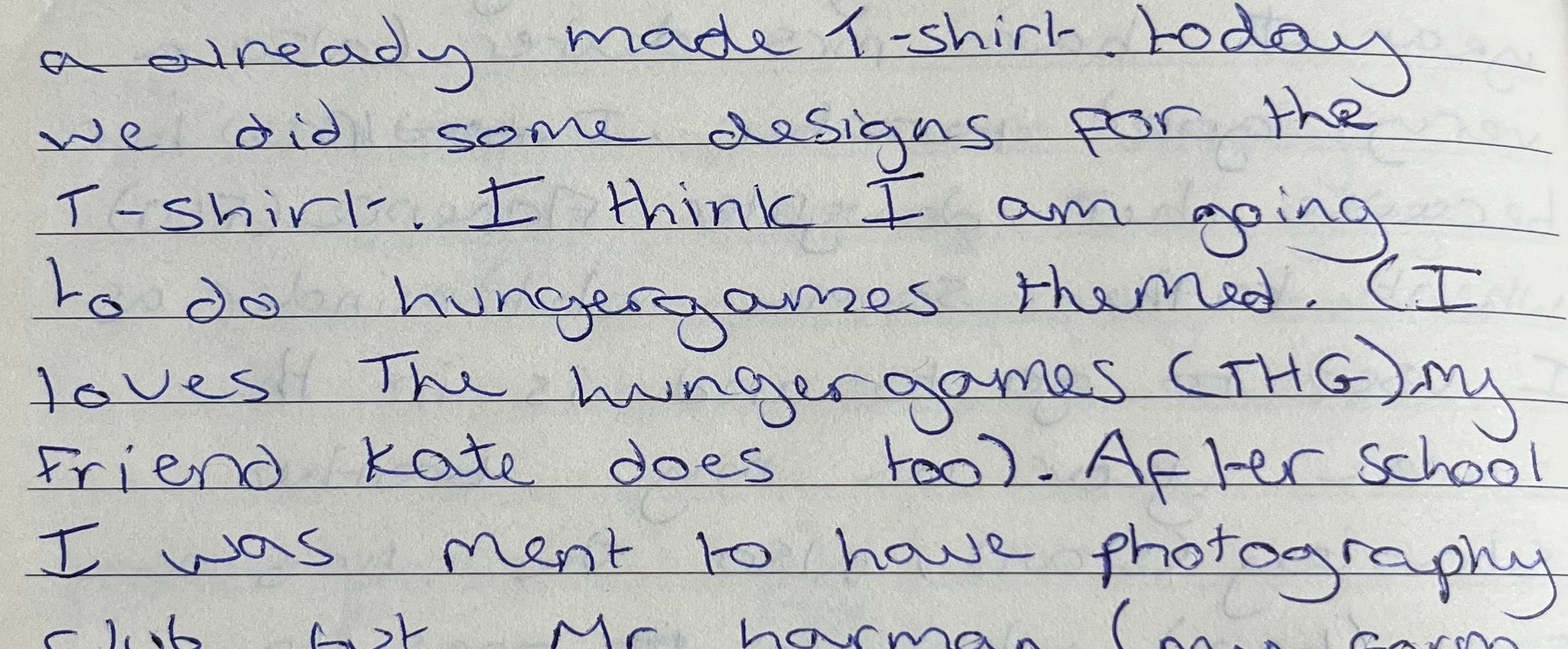
In anticipation of another Hunger Games film release later this year, last month I went to see The Hunger Games Live on Stage and then eagerly read the second prequel, Sunrise on the Reaping. Both of these experiences combined pulled me firmly back into the world of Suzanne Collins’ iconic series. Soon enough, I’d also rewatched the original trilogy films. To say I was obsessed with The Hunger Games at school would be an understatement. As much as I enjoyed The Maze Runner series and Divergent, THG was my teen dystopian franchise of choice - I had Cinna and Finnick quotes up on my wall and even made a THG-themed matching pair of shorts and T-shirt in Textiles class.
Without sounding melodramatic, I must admit that diving back into the world of Panem now, at my older, wiser age, the increasing parallels between this dystopian world and our own stood out as if circled with a red pen. As I did when I wrote about reading Babel in February’s miscellany, I can’t help but return to Ursula K. Le Guin’s wisdom from her essay collection Dancing at the Edge of the World: Thoughts on Words, Women, Place:
‘Science fiction properly conceived, like all serious fiction, however funny, is a way of trying to describe what is in fact going on, what people actually do and feel, how people relate to everything else in this vast sack, this belly of the universe, this womb of things to be and tomb of things that were, this unending story.’
Collins drew inspiration for THG from both classical and contemporary sources - notably the myth of Theseus and the Minotaur, and the experience of channel-surfing through reality television programmes interspersed with news coverage of the Iraq War. On reread and rewatch, Le Guin’s notion of describing the present holds up. The detached Capitol and the struggles of the districts mirror the contemporary economic hardship and geopolitical conflict we are currently witnessing both in real life and online. Advances in technology since 2008 have only intensified the disturbing nature of the media’s role in desensitising populations to violence. Themes of propaganda, opulent fashion, surveillance, and symbols of resistance remain extremely relatable.
My favourite of the four, soon to be five, films is - like pretty much everyone else’s - Catching Fire. However, it is not necessarily my favourite of the books, so on rewatch I tried to get to the bottom of why this particular film, even after the release of the prequels, remains the fan favourite. Unlike the others, Catching Fire feels almost flaw-free; we are introduced to new characters and given deeper insight into the workings of the districts and the Capitol through their backstories. In comparison to the first instalment of the trilogy, there is a genuine sense of rebellion beyond just Peeta, Katniss, and some berries. For anyone who is Team Peeta, this is where the romance really starts to blossom. Also, we can not forget the insane aspect ratio change as the tributes enter the arena!
Equally, in Sunrise on the Reaping - the prequel that explores Haymitch Abernathy’s Games - we get a deeper look into the pasts of several victors and their time as mentors. However, the book is, in my opinion, far less accomplished than the rest. I’ll bring my Fable review into this to reveal my critique:
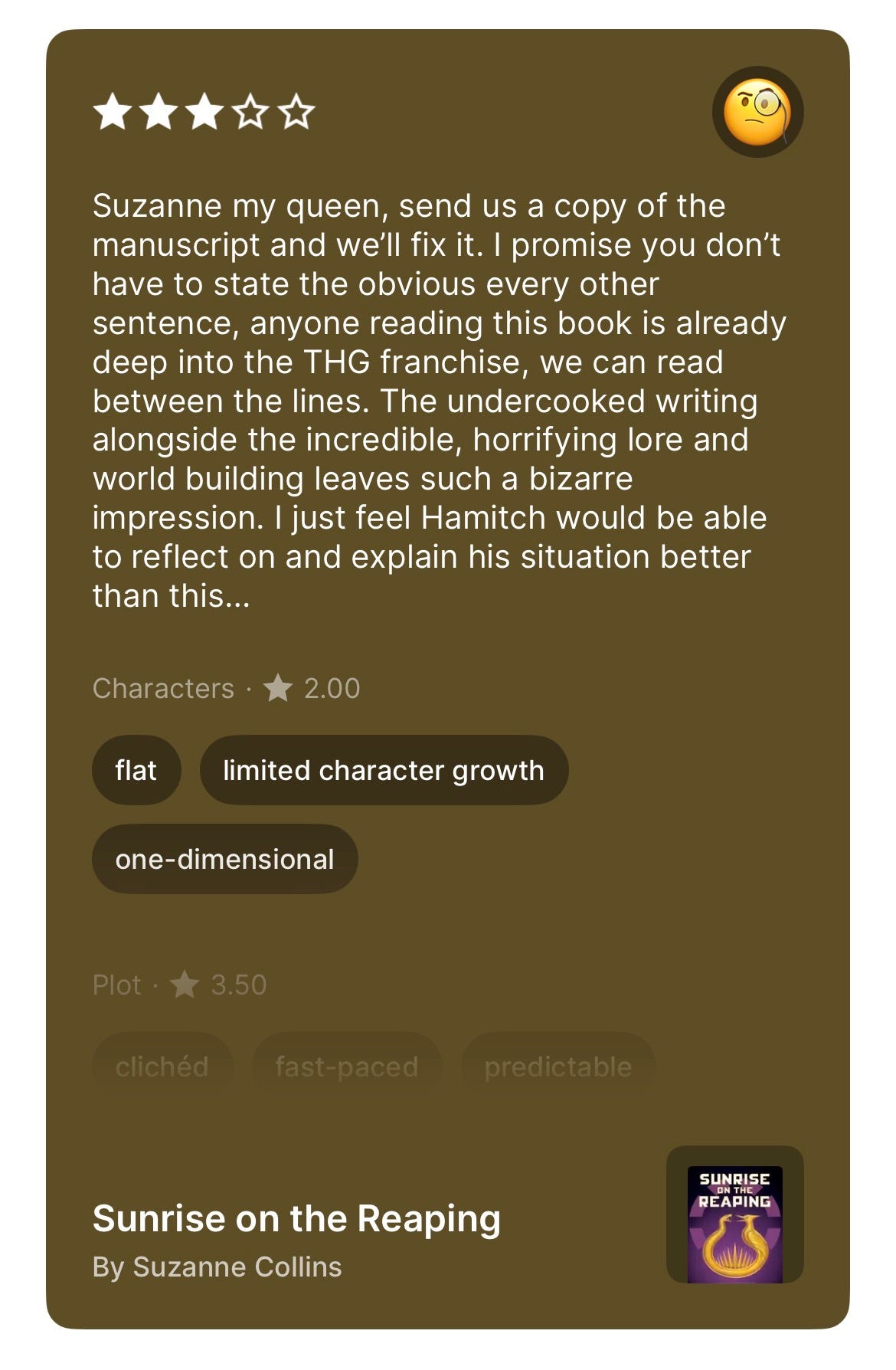
Despite clearly not being impressed by the novel, I am still looking forward to the upcoming film adaptation of Sunrise on the Reaping. The casting looks phenomenal and, from the trailer, I’m pleased to see everything presented in such a saturated and vibrant way compared with the existing films - perhaps this will help further highlight the absolute absurdity of the Capitol.

I’ll also leave a link here to the brilliant Grace Reiter’s The Hunger Games (but better) YouTube video, which was the highlight of all the media I consumed in April. Highly recommend.
ESSAY - Bureau for Listening
I discovered the Bureau for Listening through Instagram. They describe themselves as ‘equally a real and conceptual artist and research bureau investigating and promoting listening as a critical, empathic, and artistic practice.’ The Bureau for Listening both produces its own work and actively highlights the practices of other writers, artists, and researchers. They describe themselves as a nomadic group, though they are primarily based in Copenhagen. The website consists of writings on listening as an artistic, critical, and social practice. From ‘Making Listening Audible’ to ‘Uniform for Listening’ to ‘Aggressive Listening’, the bureau uses a single conceptual entry point to open up numerous areas of human experience - a creative learning method that I am consistently drawn to.
In terms of essays in particular, I closely read ‘Listening as Alchemy’ and ‘Listening Against Morality’. I found the site’s content to be of varying quality, but I think that is part of the point. Research structures like this aim to give form to a relatively intangible concept, and that in itself is a messy task. In ‘Listening as Alchemy’, listening is explored as a neutral state, while in ‘Listening Against Morality’ the ethical implications of listening and non-listening are interrogated.
The Bureau’s work shares strong philosophical and structural parallels with the Fluxus movement, especially in its emphasis on the ‘quotidian’, the dissolution of the artist–spectator hierarchy, and its network-based structure. The content sits between essay and performance, with much of it leaning towards the manifesto form.
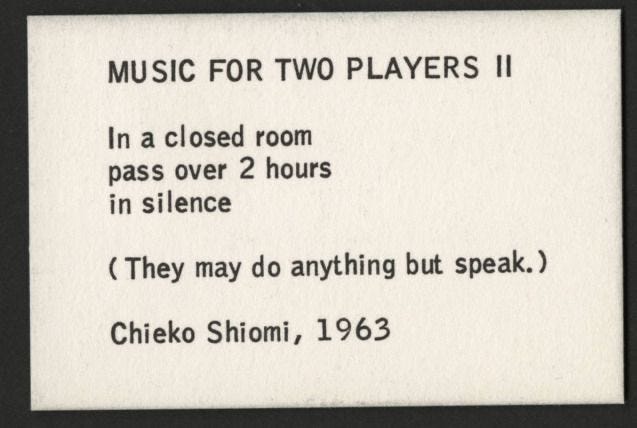
Mieko Shiomi’s < Music for Two Players II > (1963) comes to mind. Much of the Fluxus movement’s work was concerned with sound and scores, developed from the world of musical composition into performance art. These pieces often take the form of instructions from performer to audience. Like the work of the Bureau for Listening, the piece is not complete until the audience participates.
ORGANISE - Notion tasks database
Back in my January miscellany, I wrote about starting to use a whiteboard wall calendar and how helpful it had been. Ever one to grow bored of a system and go searching for novelty, this April I took things a step further and experimented with using a Notion task database. Three words: waste of time!
The idea was to keep a database of tasks that I could assign to a calendar view. Initially, the process was helpful - particularly when it came to breaking tasks down into areas and ordering them within those categories. Beyond that, though, the system quickly became overwhelming and required far too much maintenance to stay on top of.
I realise more and more that, if I’m going to use any sort of time-based organisational structure, it needs to be: a) simple, and b) abandonable. There are some weeks when I have no interest in using a calendar at all, or when I’d rather spend my free time following whatever spontaneous ideas come to me.
The wall calendar works. I use different coloured pens for different areas - blue for work, red for events, green for writing, orange for poetry events. I only need to update it every week or so, which means I’m not constantly tending to it. Instead, I can simply glance at what’s going on each morning because it is, quite literally, hanging on the wall I walk past every day.
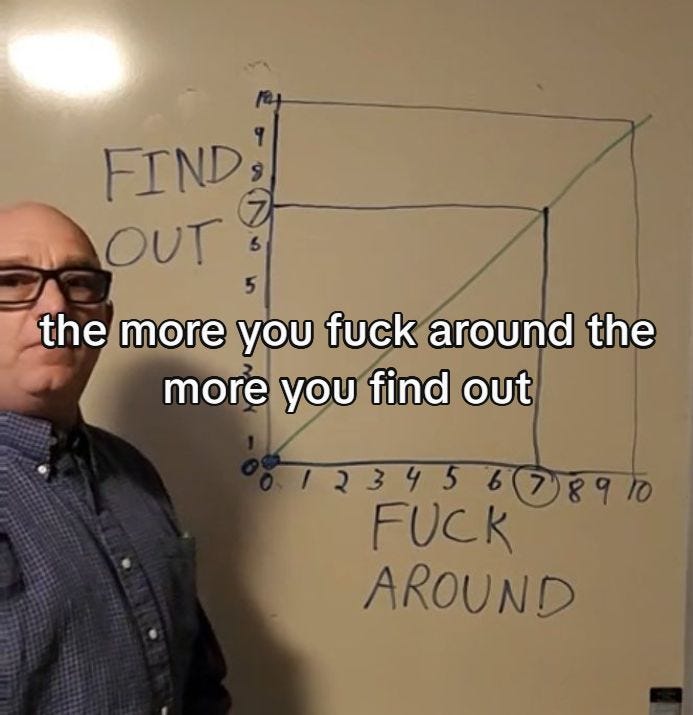
The impulse to optimise was a valid one, but what works, works. I’ll call it a worthwhile experiment to justify the time I spent building the database, but really I know that we often spend more time improving systems than actually using them. Optimising is a wonderful way to avoid creating.
I did not enjoy this work-about-work, and I am not a machine to be improved, even if the urge to create sometimes swings into systematising.
FORWARD - Spring!
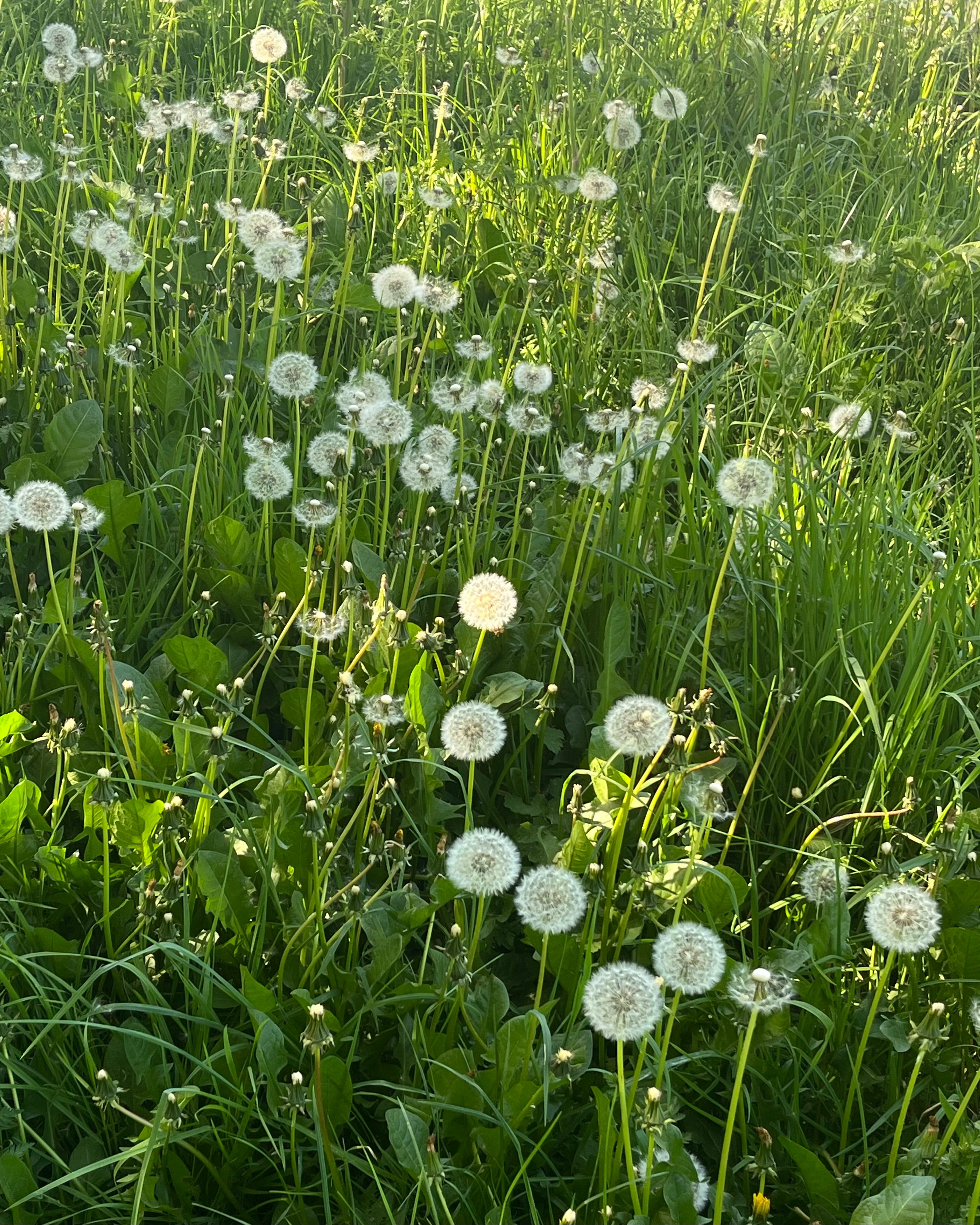
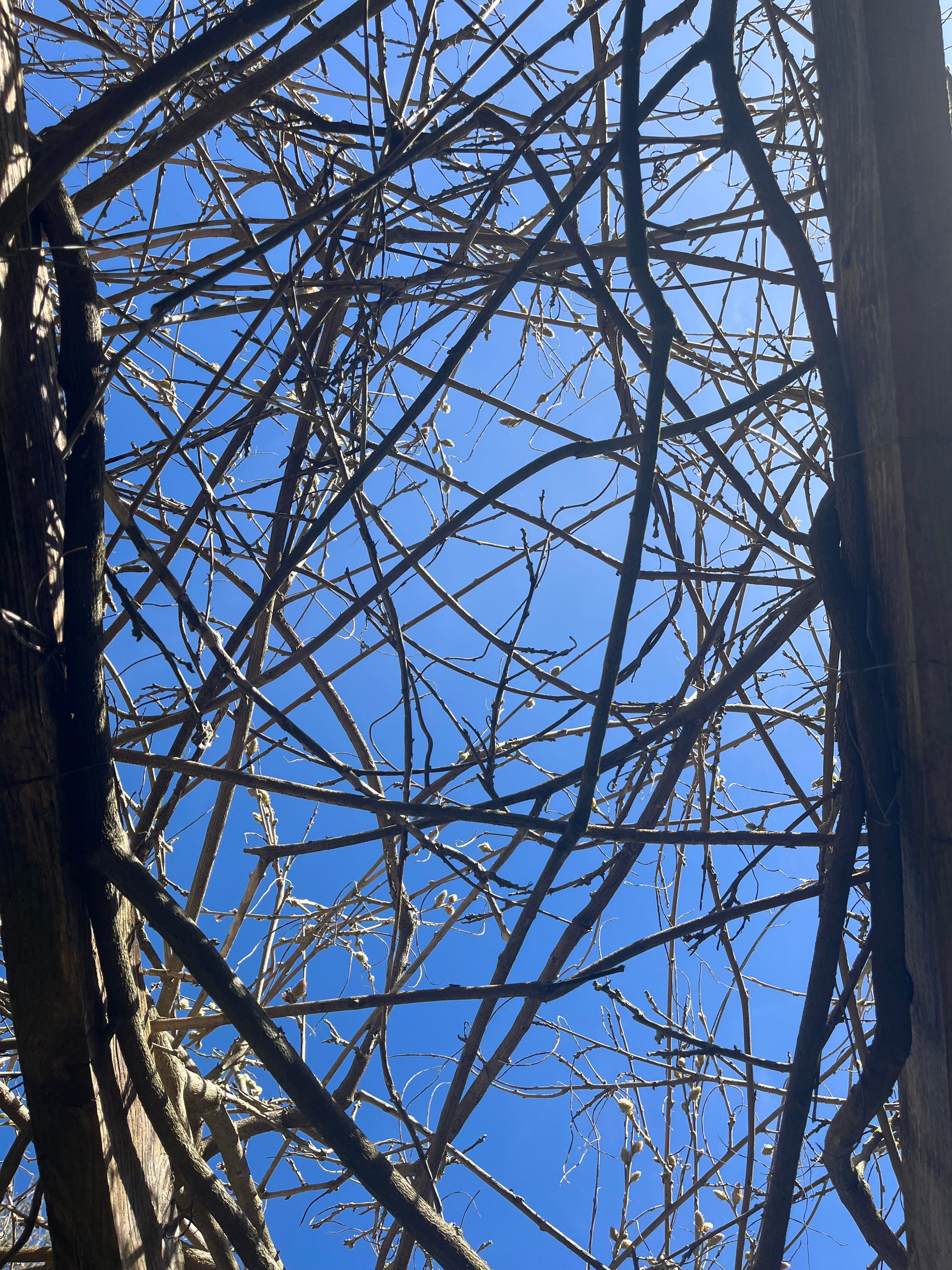
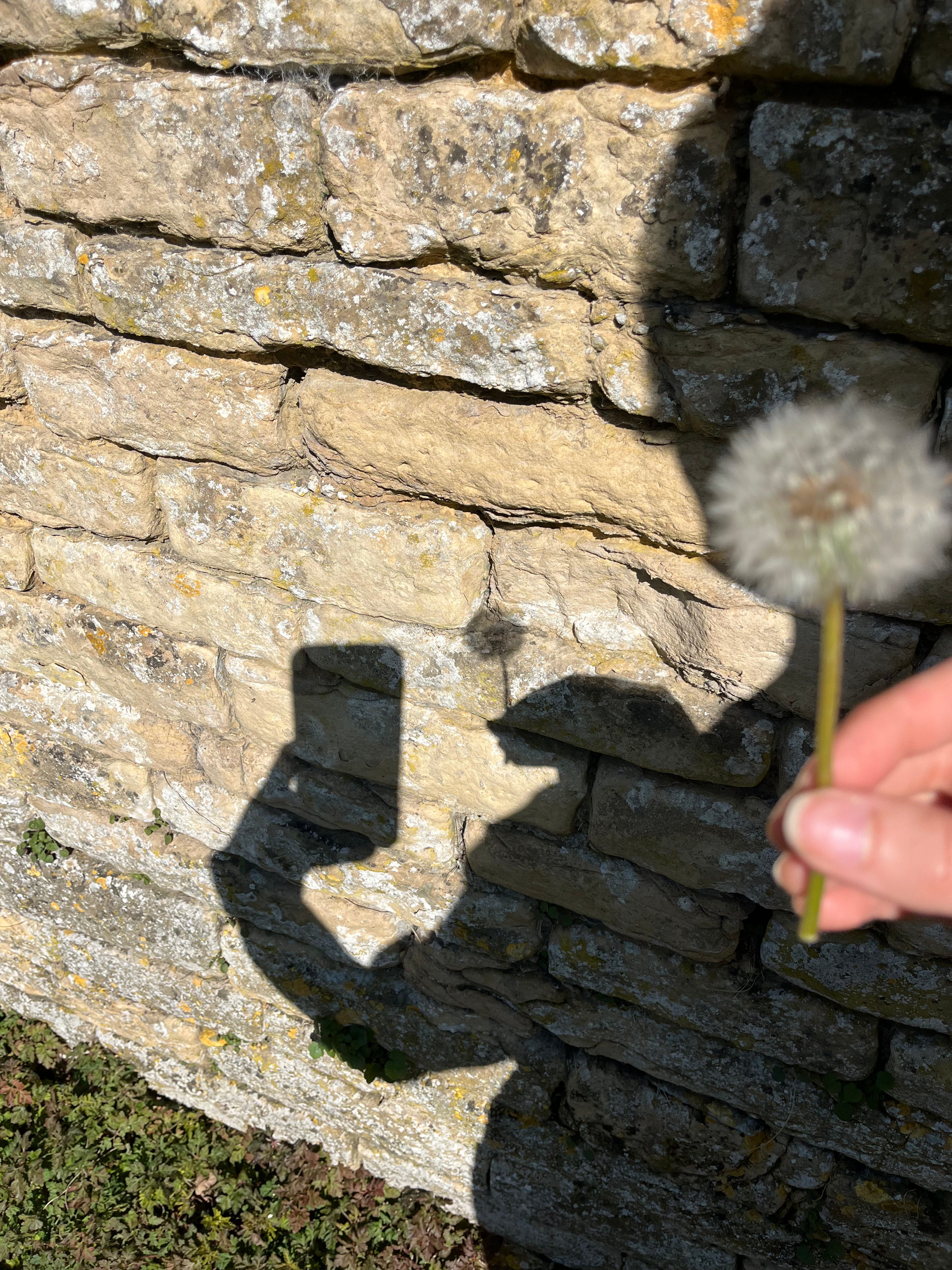
I just want to spend time outside in the sun, that’s it, that’s this section of the miscellany. The sun makes everything better, here are some pictures to illustrate this point -
Thank you for exploring April’s miscellany! I’d love to hear about the media you’ve enjoyed this month and any rabbit holes you have fallen down.
Here is a link to my April Sublime canvas and all of the references in this miscellany…
I would like to hear your manifesto! I also wrote a manifesto (of sorts!) at the end of last year, although mine is just a few bullet points stuck on my wall and is mostly art-related. I refer to it quite a lot though, and having it up on the wall above my desk for me to see is quite useful. I’ve left the paper blank after the list ends in case I would like to add to it over time. It’s really interesting to see how different individuals have interpreted the manifesto form, so I’d be intrigued to hear yours!
Also I would like to say just how beautifully written this whole article is. It really is a joy to read! Made me think about lots of things. ☺️