
Monthly Miscellany | March
Media roundup and recommendations

Welcome to my March miscellany!
Here lies a collection of thoughts on, and recommendations from, what I’ve been learning about, reading and watching this month. The miscellany is organised through action words: make, research, think, read, poetry, watch, essay, organise, forward.
This month spans crafty crowns, reading aloud, journeying across waters, 1000 ghosts, alter-egos and timelines. Feel free to skim through, I hope you find something(s) of interest!
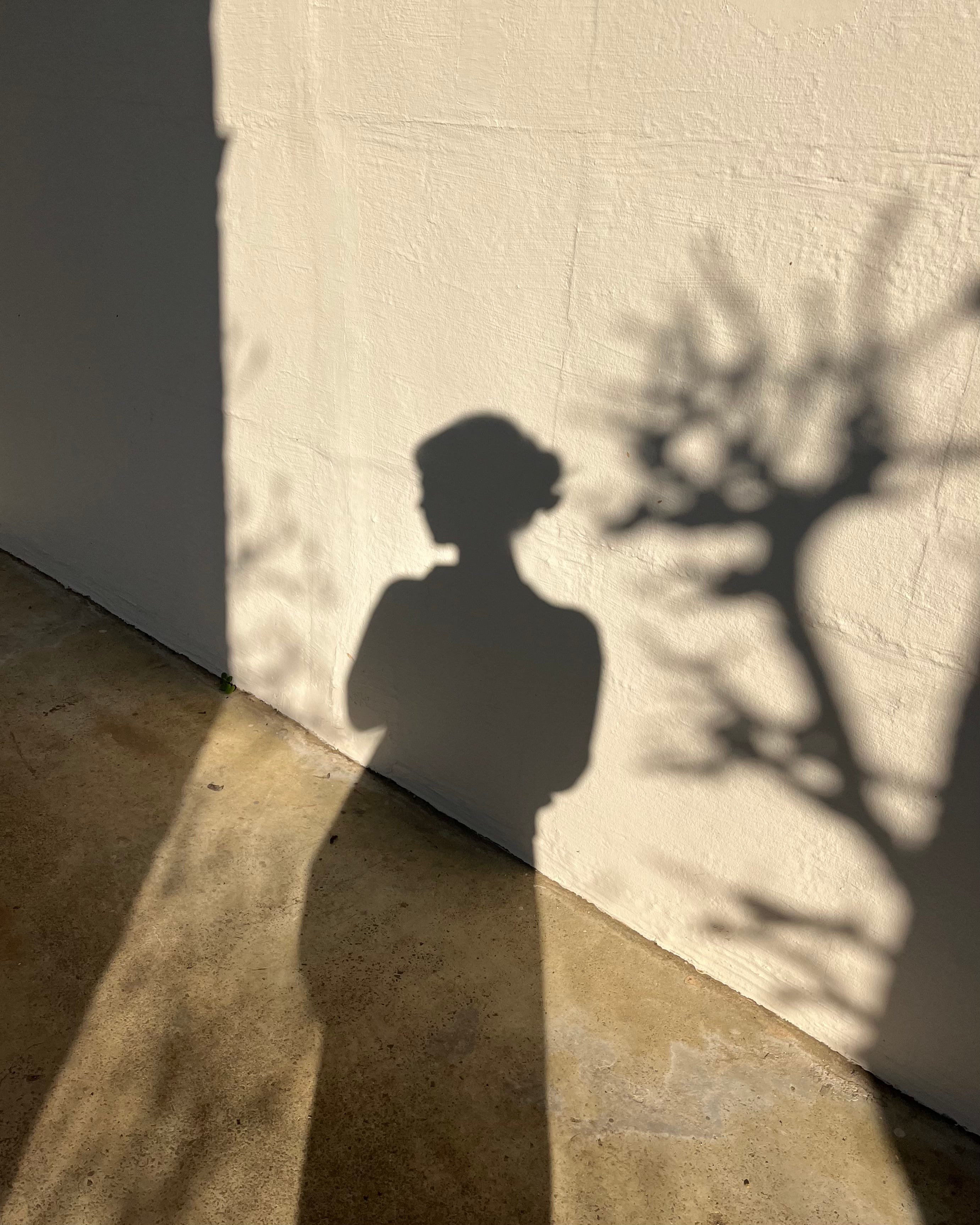
MAKE - Crowns
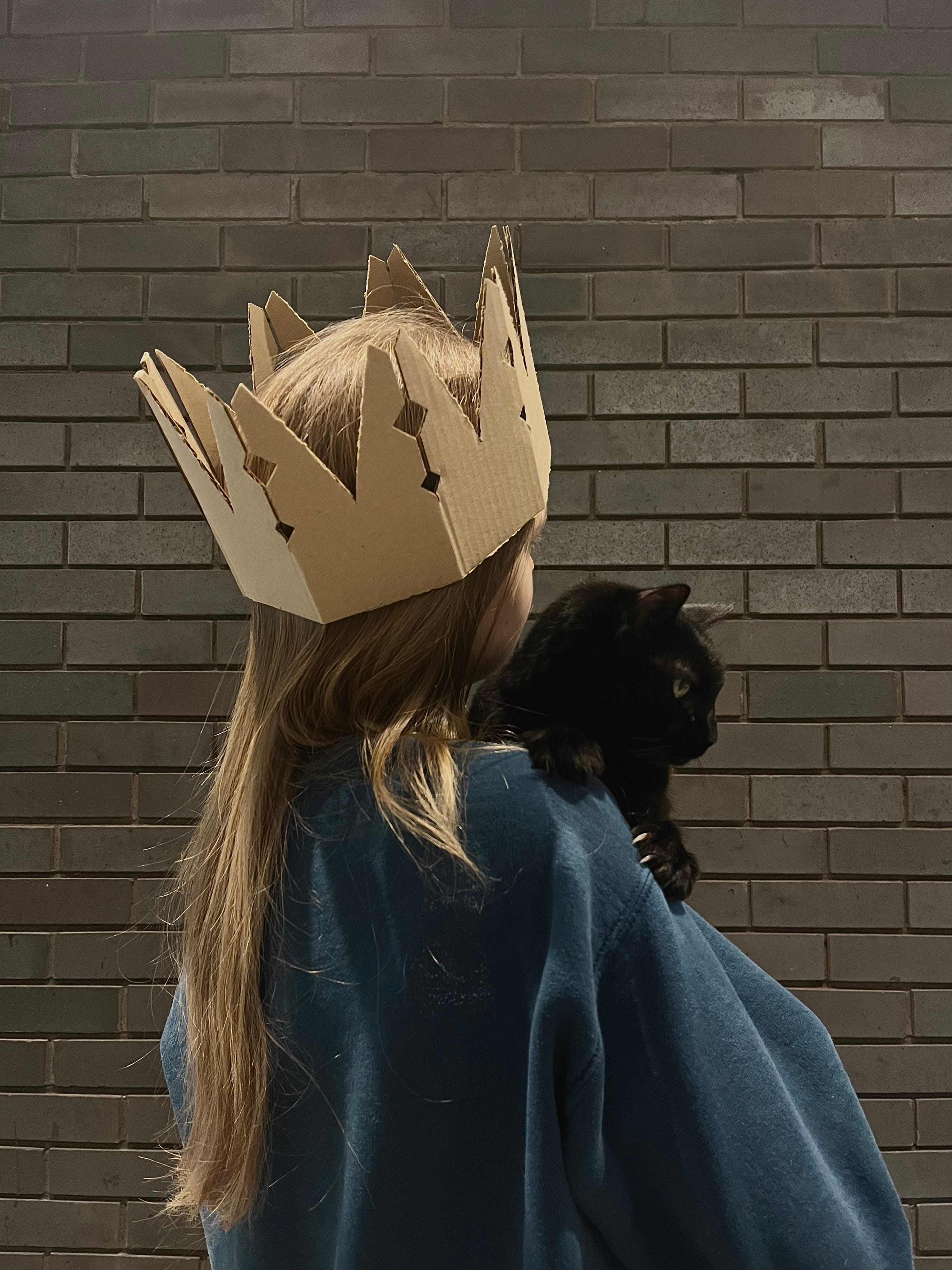
A colleague and I found some sheets of cardboard with little diamond shaped slits in them at work. We agreed they needed to become crowns and so my sister and I did just that!
A swift return to the sort of crafty antics we’d get up to as children ensued. Cut out some triangles, measure one another’s heads, tape everything together and voila - we were kings of our very own kingdom by dinner time. As these things go, we soon adopted an old English lilt through to some variant of the Queen’s English and eventually French, taking it in turns to yell ‘Why do you think I have this outrageous accent, you silly king-a?!’ at one another from the top of the stairs. Both Mum and the cat were highly entertained!
RESEARCH - York
Mid-March, I went on a solo trip to York. Recently, I’ve been trying to de-centre London as the capital of everything and learn more about other areas of the country. It was also just nice to get away and do my own thing for a few days.
York is sometimes known as the city of 1,000 ghosts. This reputation stems from its history of intense violence, including Roman, Viking and Civil War conflicts, as well as infamous plagues and executions. It’s clear how pivotal York has been in English history from its array of architecture - in particular the towering Gothic cathedral, the Roman and medieval defensive walls and, the only remaining part of York Castle, Clifford’s Tower.
I had been to York before as a child, on a school trip to the popular Jorvik Centre; however, I don’t remember much beyond the smelly reconstructed Viking city ride and a boy in the class passing out while wearing a replica chainmail vest.
History was never my strong suit at school, and I’ve always found historical information particularly difficult to engage with. Instead, the projects that stayed with me were the more creative ones - like building a motte-and-bailey castle from lollipop sticks or sewing an Aztec tilmàtli (cloak).
These days, I prefer to learn about the history of places through photography. This approach is less about learning facts and more about using the camera as a tool for noticing traces. I touched on this in my Natural Framing essay. Each era has its own height, textures and colours, and the camera becomes a way of familiarising myself with them. As I begin to notice details, I find myself asking questions with tangible answers. In a place like York, a lot of these answers can be found on plaques or in the museums.


A section of the city walls visible from the Castle Museum.
Inscribed tablet recording the 1889 restoration of a 37 yard section of the walls.
Queen Victoria and Prince Albert’s V&A monogram on Lendal Bridge, opened 1863.
The Perky Peacock, one of a few cafes built inside Yorks bridges and walls - this 800-year-old tower would have been used to control river traffic and toll payments until 1553.
Daffodils around the base of Clifford’s Tower, planted to commemorate the massacre of 1190.
Timber structure added to the interior of the tower in 2022 to protect the ruin and provide viewing platforms for visitors.
St Martin Le Grand, Coney Street, usually a little wooden admiral sits on the top of the clock but he is currently being restored by Cumbria Clock Co.
Iconic black and white Tudor style at St William’s College, built in 1465 for York Minster’s Chantry Priests.
The Bar Convent chapel, established in 1686 and operated in secret, built away from the main road as at the time Catholic convents were prohibited.
THINK - Reading aloud
“The ancient Greeks believed that when you read aloud, it was actually the dead, borrowing your tongue, in order to speak again.”
- Ruth Ozeki, A Tale for the Time Being
Last November, in Issue 05 of Picturing and Poeting, having just read my poems at an open mic for the first time, I wrote on the topic of Voice. Since then, I’ve been reading at a couple of open mics each month. It’s taken time and practice, but I no longer worry that my knees might betray me. This month, I’ve grown comfortable enough to find myself thinking about the act of reading aloud, rather than simply getting through it - once there is safety, there is awareness.
Last month, one fellow poet told the room, ‘reading aloud helps me read in my mind’. In practice, this proves to be true. Reading aloud and reading silently are often treated as separate skills, but they undoubtedly sharpen one another. It was only with the anticipation of an audience that I began reading my drafts aloud to myself, bringing a new sort of attention to pace, rhythm and breath.
The ear as an editing tool can catch what the eye misses. Some edits are invisible on the page and reading aloud exposes them; it slows us down and shifts our attention as the ear picks up tone, cadence and inflection. I find that I stop reading or trail off when I notice something is not quite right. In fact, reading aloud engages different parts of our brains. Anne-Laure Le Cunff wrote about Thinking Out Loud for Ness Labs:
‘Research shows that vocalizing our thoughts engages different cognitive processes than silent thinking. Voltaire reportedly read every page of his work aloud multiple times. Darwin did the same with scientific drafts.’
When I read aloud I am unlocking a different part of my mind and bringing it in contact with the work, almost like getting a second opinion.
At first, I wondered whether writing in anticipation of an audience might negatively affect my practice - that a poem, even in its earliest form, would already be shared, never fully private. I’ve since come to see that there will always be a shift in understanding when a poem is passed between us.
Reading, writing and listening exist within the same Venn diagram. I’ll suggest that at the centre is not language or communication, but understanding. While drafting and performing, moving between the mind and the voice allows the poet to understand themselves. The audience or reader completes the loop. Both reading and listening offer different facets through which that initial understanding can be received. As more eyes and ears are introduced, a poem gains layers, gradually rounding out into meaning. In this environment, the poem is always evolving.
No matter how much you prepare, there are inevitably mistakes. Open mics - at least the ones I’ve attended - function as spaces for low-stakes performance and experimentation. Alongside the readings, there is conversation and feedback, as well as a sense of occasion and a collective appreciation of poetry.
Lifted from the page into the room, the audience’s attention shifts from reading to listening, freeing the visual parts of our brains to picture each poem as it unfolds. There’s also something about seeing a poet read their own work that helps us remember and begin to build a sense of each other’s written worlds.
It might seem like analysing reading, writing and listening like this is a bit of a wormhole but I at least feel paying attention to what is happening in these rooms unlocks a level of gratitude - that I can read aloud, learn to read better and that there are people willing to listen.
Reading aloud has reshaped my practice entirely. I used to notice things, think that’s a poem and put them straight onto the page. That is a way of working I can still return to, the exclusively written poet isn’t lost. But now, reading has expanded my approach, offering new ways of poeting. My aims have shifted too: I want to write poems that work both on the page and when read aloud - that’s where I’ve recently found the most satisfaction.
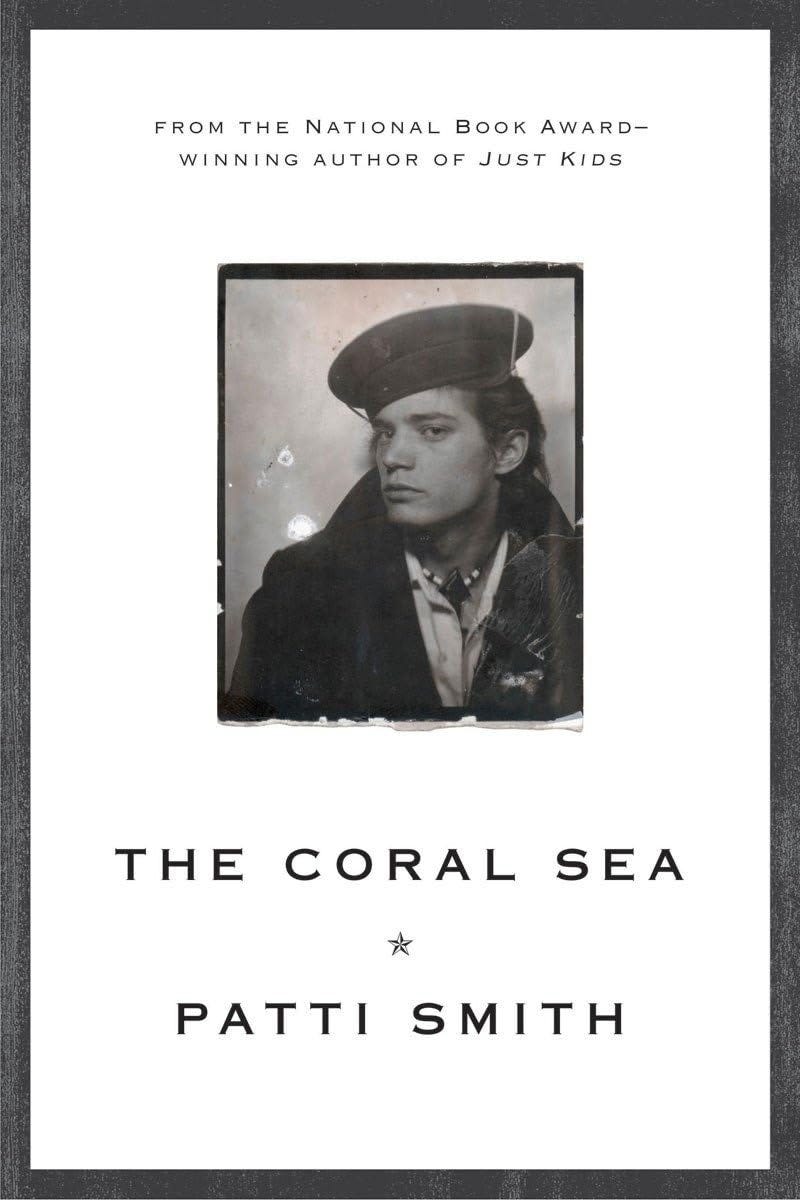
READ - The Coral Sea, Patti Smith (1996)
While in York, I re-read The Coral Sea. It’s the kind of book you can return to again and again, so dense with description that something new reveals itself each time. In it, Patti Smith explores her own grief by recounting Robert Mapplethorpe’s journey to see the Southern Cross. The text moves between prose and poetry, accompanied by photographs taken by Mapplethorpe.
If Smith’s work could become any more full of wonder and honesty, this is the book where it happens. Having read Just Kids a while back, I felt I had the context to carry me through The Coral Sea’s more fluid, impressionistic style. It’s certainly not for everyone, but I’d readily recommend it to anyone who enjoys poetry that tells a story.
There’s also a real sense of immediacy to The Coral Sea - it was unmistakably written in the wake of Mapplethorpe’s death, and therefore a sharp keyhole into Smith’s own grief.
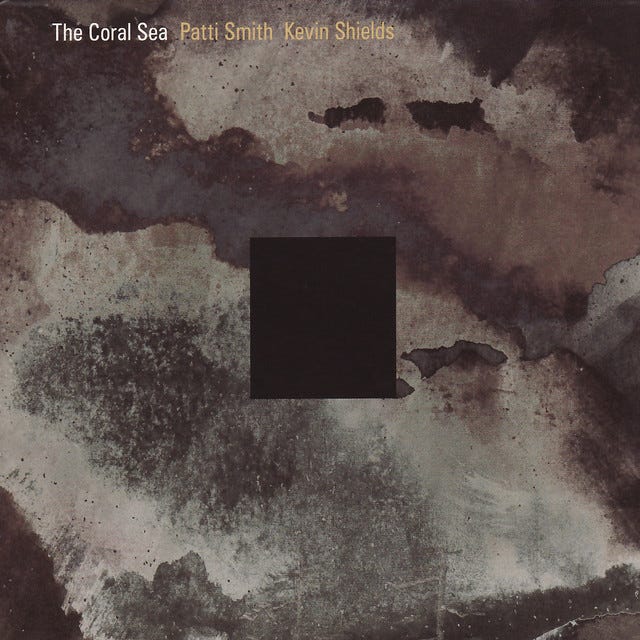
In doing a little research for this miscellany I found out that there is an album version (2008) of The Coral Sea in which you can listen to Patti Smith reading with musical accompaniment by Kevin Shields of My Bloody Valentine. If I was not already likely to return to this book again, I will now most definitely be listening to the album.
POETRY - Surimono
I learnt about surimono at the York Art Gallery Making Waves exhibition. Surimono are privately commissioned, high quality Japanese woodblock prints popularised during the Edo period. Often exchanged as gifts among poetry group members, Surimono consist of poetry and image. These prints most commonly feature kyōka (mad poetry) or haiku.
‘surimono often employed high-end production techniques such as printing in metallic pigments and embossing. These expensive prints, originally produced in small numbers, were often reproduced for wider circulation in later decades.’
- York Art Gallery
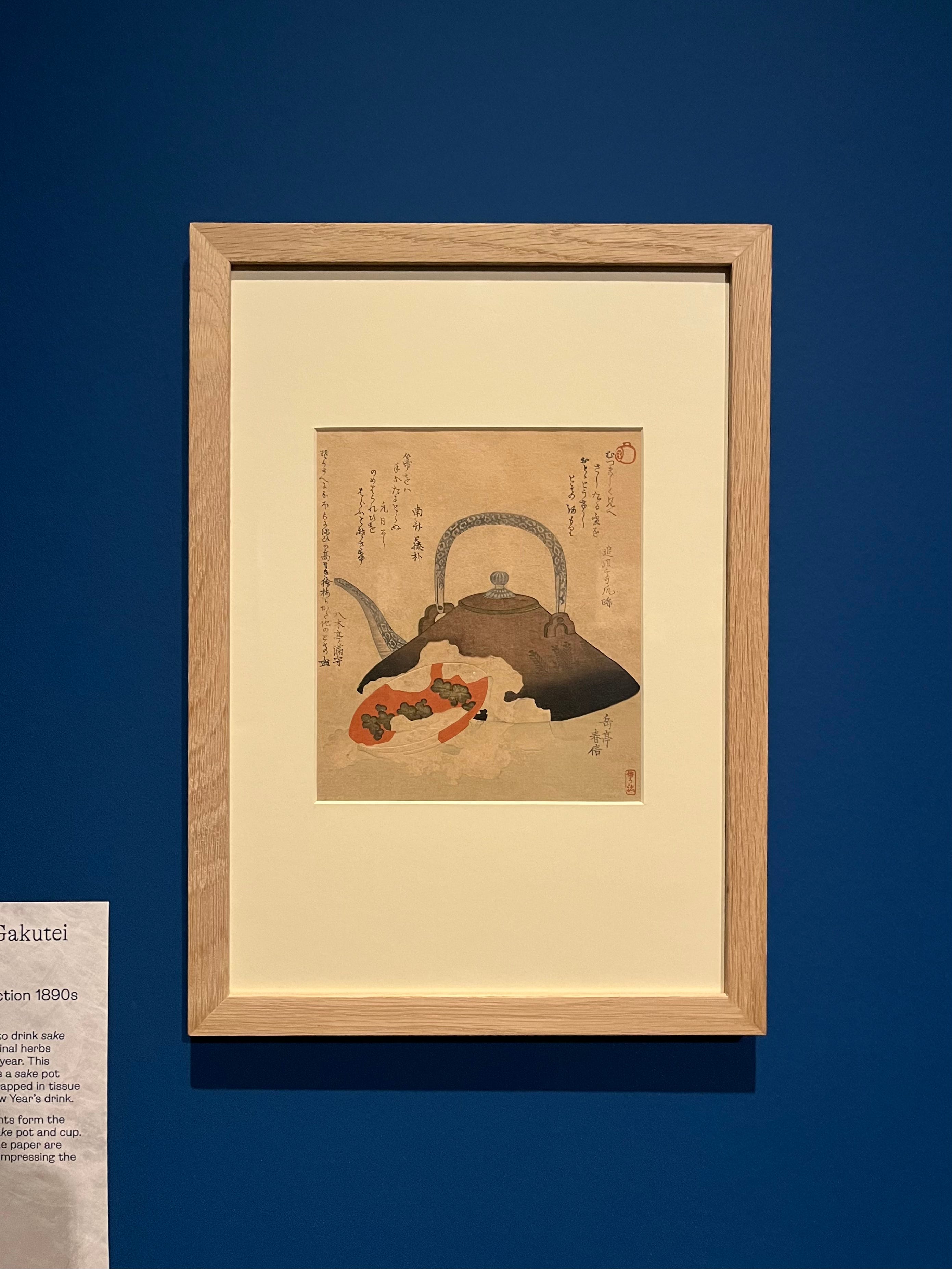
On the British Museum website there is a selection of surimono prints you can view and some of them have translations for the poetry inscriptions.
WATCH - Waterwalker (1984)
‘In fact there’s no bad guys at all. Just you and me, paddling the biggest and most spectacular lake in the world - Lake Superior.’
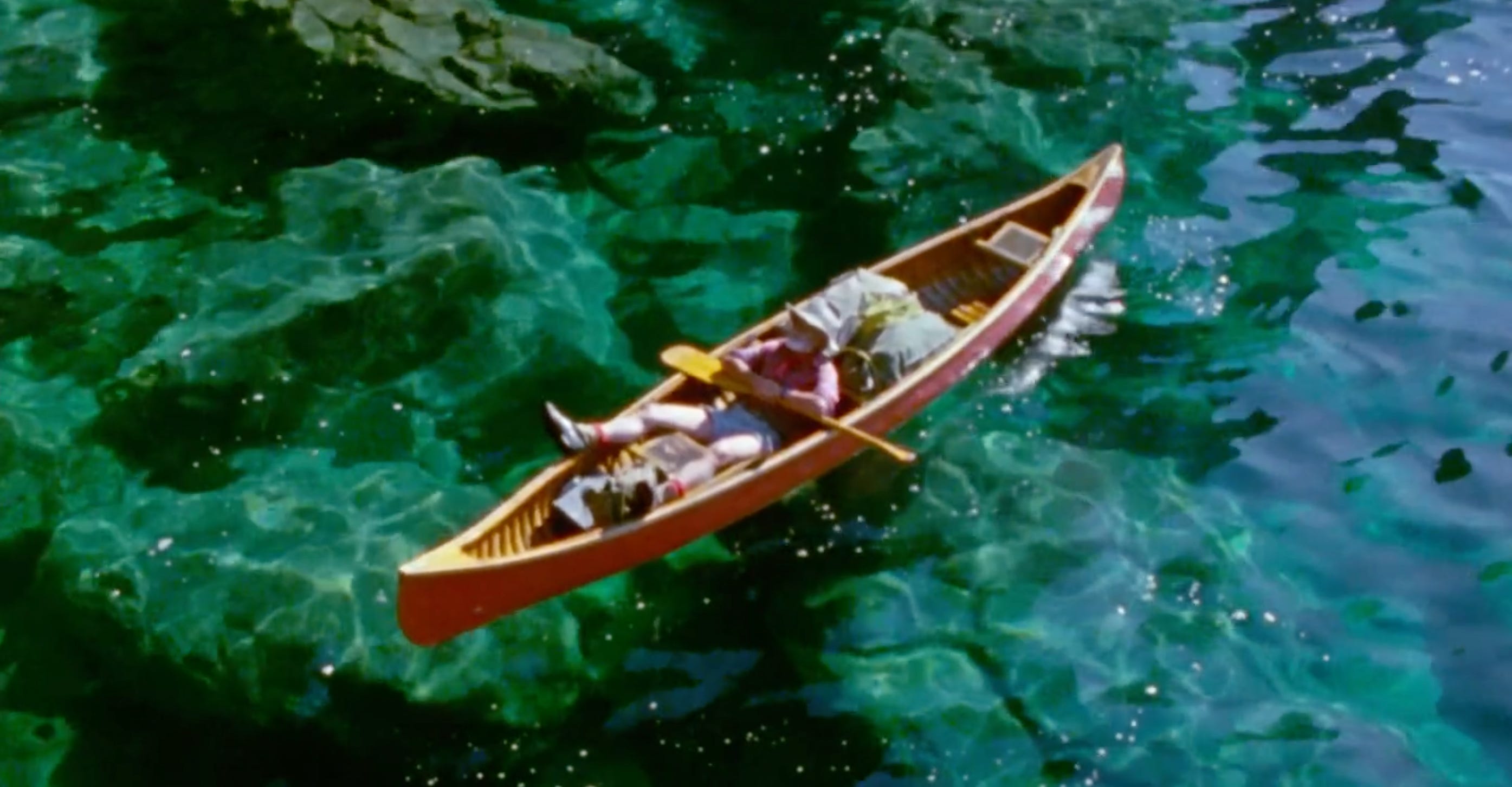
Thanks to the @onf_nfb Instagram account, I recently discovered that the National Film Board of Canada has thousands of films available to watch for free online. A list of those I’d like to watch is growing, but I started with Waterwalker. This feature-length documentary follows Canadian environmentalist, filmmaker and painter Bill Mason as he canoes across Lake Superior.
Although, on the surface, Mason seems slightly mad, as the documentary unfolds it becomes clear that his solitary nature is rooted in a deep love of the outdoors. He calls out lichen, wet pebbles and Turner, but the real hero of the documentary for me was the colour red. Amidst the greens and blues, and eventually snow-white landscapes, there is always Mason’s red cedar canvas canoe.
Mason is what I think of as a secret philosopher. Although he is remembered primarily as an artist and outdoorsman, throughout Waterwalker he offers reflections such as, ‘God could have designed the canoe first and then set about conceiving a land in which it could flourish,’ and, ‘You look at a place like this and you know that the only reason it’s still here is because it’s so hard to get to.’
He also returns repeatedly to an Indigenous perspective, suggesting that ‘the only hope for what’s left of the natural world is to rediscover that love and compassion for it that Native peoples have.’ The incredible soundtrack is interwoven with Mason’s own voiceover, alongside Wilfred Pelletier reading passages of Indigenous wisdom.
Despite the strong spiritual undercurrent of Waterwalker, the documentary did not come together easily. It was Mason’s final film in a 20-year career at the NFB. Loosely structured, it presents a more reciprocal view of the natural world than standard nature documentaries. The NFB had firm ideas about shaping it into a feature-length film and required Mason to work with a co-producer. The result is a collage of footage from different years, scenic shots of Lake Superior by Ken Buck, and sequences drawn from Mason’s earlier work.
I watched Waterwalker myself on a day off with a cold. I tend to turn to nature documentaries when I’m ill, and this one offered a perspective and style I hadn’t come across before. It’s left me curious to explore more of what the NFB has to offer.
ESSAY - Play
I’m sure the cardboard crowns played a part in it, but as it was my birthday this month, I’ve been thinking about growing up and feeling fairly nostalgic about our childhood. My sister and I’s relationship is, naturally, built on play. With her in particular, I find we reach for play almost subconsciously when things get heavy.
This reflection brought me back to episode 39 of Wild Geese. In the episode, Anna Howard frames play as a practised skill and suggests that, when carried into adulthood, it is not frivolous but deeply valuable. She describes how taking on alter-egos allows us to try out different perspectives and begin to understand that we can feel multiple things at once. In her view, play becomes a way of processing that exists outside hierarchy and instruction, where we are invited to form and find answers to our own questions through intuition rather than rigid thinking.
Anna also reflects on how, as adults, we often take ourselves far too seriously, confining ourselves to analytical modes of thought and moving within societal expectations that children have not yet encountered. Drawing on Lynda Barry’s idea, she suggests we must ‘remember to forget’. Play, then, disrupts this seriousness, creating space to accept and enjoy transformation. It encourages us to let go of control and act without a fixed outcome.
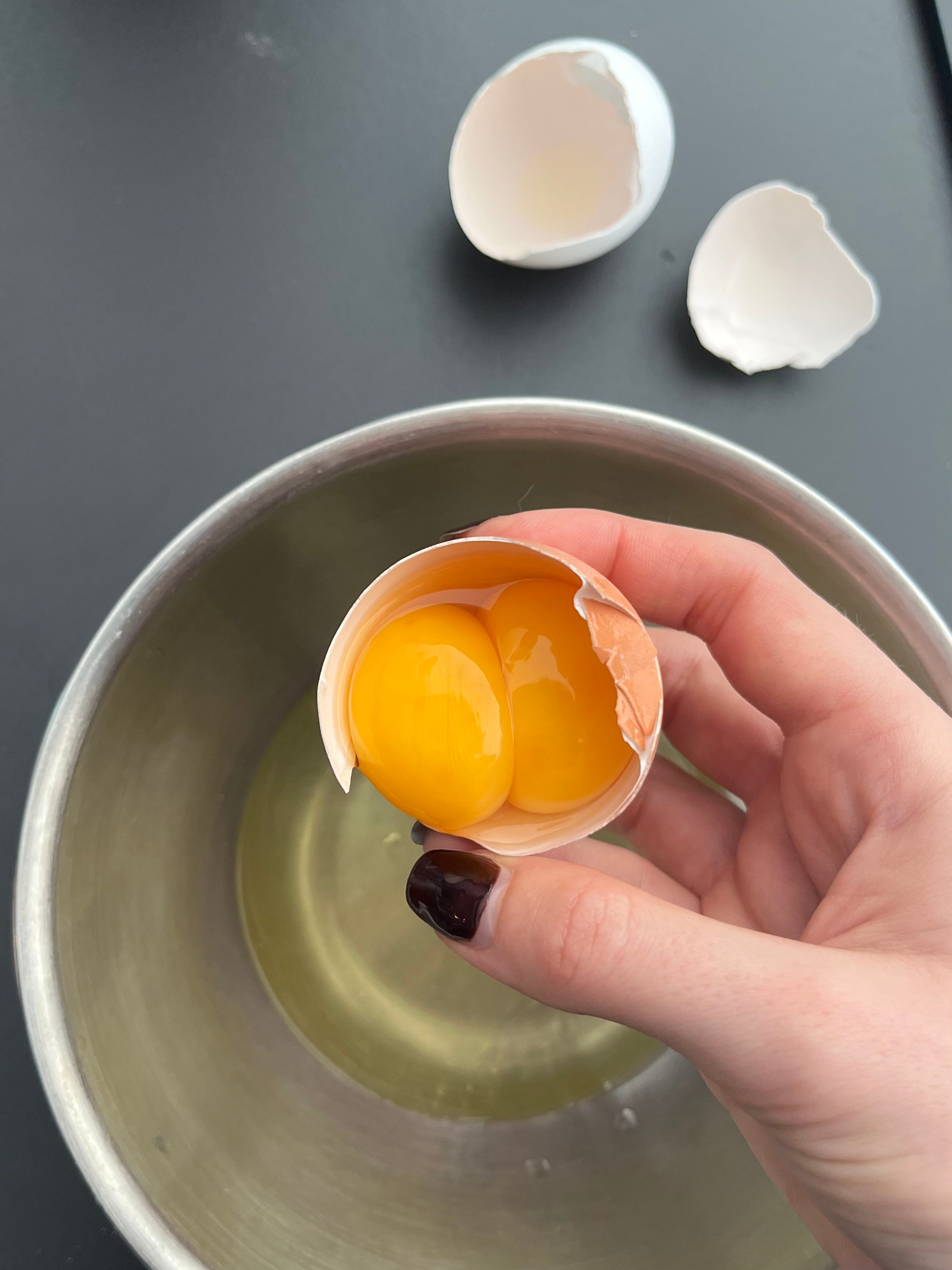
In this way, play runs parallel to creativity, which Anna describes as ‘slippery and pranksterish’. At times, it can feel as though creativity has disappeared entirely, only to resurface unexpectedly - floating in a double yolker, behind the headboard while rearranging furniture, or among a stack of leftover cardboard. Perhaps this explains why both play and creativity feel so closely tied to a sense of aliveness: they are always in flux.
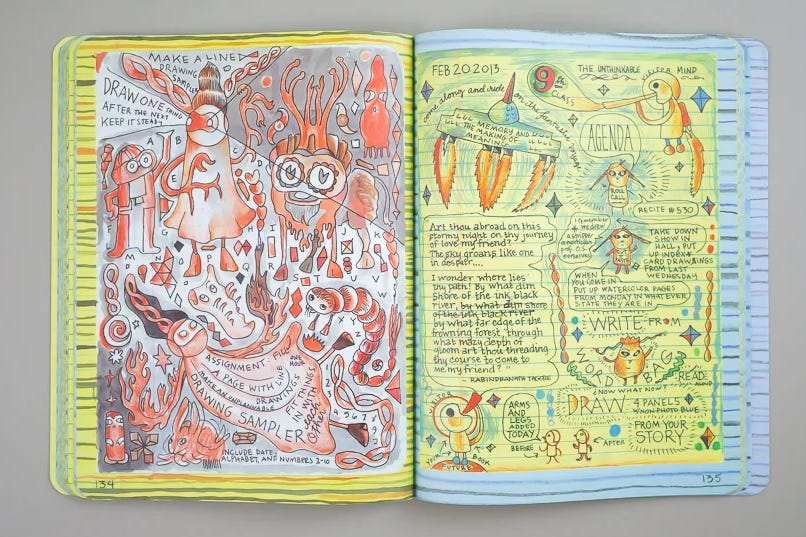
Much of what Anna explores reminded me of David Graeber’s essay What’s the Point If We Can’t Have Fun?. In particular, Graeber draws on theory from Peter Kropotkin to argue that animal play does not always ‘serve some ultimately practical purpose’. Scientific explanations are seen as rational - rational here implying growth or progress. Speculative notions of play, lacking clear criteria, are often regarded as intellectually scandalous or mysterious. Birds flying for pleasure, ants arranging mock wars, and wrestling squirrels are used as examples. Overall, he suggests that we cannot, and do not need to, attribute rational motives to all behaviour. One quote in particular stuck with me:
‘To exercise one’s capacities to their fullest extent is to take pleasure in one’s own existence, and with sociable creatures, such pleasures are proportionally magnified when performed in company.’
I think a lot of our anxiety stems from a need for rational explanation, which ironically can trap us in a freeze state. Perhaps play, as we used it as children, is a reliable way to push analysis aside and move through the side-door that reveals itself.
ORGANISE - Instagram
At the start of March, I set about on the looming task of sorting out my Instagram page. I’d been meaning to update it for a while, but as it had mostly been a space for showcasing graphic design work and degree projects, adapting it into somewhere I could share my poetry and writing felt intimidating. Previously, Substack was for writing and Instagram was for design.
While at university, I found myself increasingly drawn to writing about and photographing the world around me, both alongside and intertwined with my design projects. My graphic work started to follow the topics and ideas I wanted to research and write about, rather than being driven purely by the act of designing or solving an external brief. There isn’t necessarily a tension between these disciplines, more a web of creative outlets. Designing, writing, picturing and poeting all call on different skills, but my values and approach tend to carry across them.
Instagram itself brings its own set of complications. There’s an expectation of curation, yet I’m interested in sharing honest work in an honest way. My photography practice helps here, especially in a space that leans so heavily on visuals. Images can support the writing, offering an entry point via a format people are already used to engaging with. For the most part, I’m trying to trust my instincts, deciding which projects and stages of their creation to share without overthinking it. Experimentation is good, play is good.
A lot of my writing feels more personal than my design or photography work. That doesn’t worry me. Writing requires a different kind of reception; someone has to choose to take the time to read it. It is less immediate than the visual and audio content we are used to seeing online so there is more choice involved in consuming it.
Writing, for me, is primarily a thinking tool. By the time I share something, it has usually already done its job, which is to help me amalgamate ideas and research. In that sense, it remains a fulfilling part of my practice, even without an audience. Yet, I feel a pull to share all of these areas of my practice and how they intertwine - again I’m trusting my intuition by accepting that pull. Now my instagram sits somewhere between a portfolio and a diary and overall feels like an honest enough reflection of my developing practice.
FORWARD - An interest timeline
I wrote about how I use Sublime in the organise section of last month’s miscellany. As a personal knowledge management tool, Sublime allows me to draw connections between media and quotes I have bookmarked and carve out areas of interest.
My latest plan to experiment with the platform involves making a timeline using the canvas feature. I want to map out the theories, art, essays and events I keep returning to. I’m interested in what more I can drawn from references I have already looked at by connecting them via time period rather than topic area. What happens when a selection of references are all situated on one single axis? I like the idea of being able to go down the timeline, pick a date and think what was happening across completely different areas of culture at this time - can I find some new parallel? This should also help with the struggle I’ve always had placing things in historical context.
Thank you for exploring March’s miscellany! I’d love to hear about the media you’ve enjoyed this month and any rabbit holes you have fallen down.
Here is a link to my March Sublime collection and all of the references in this miscellany…
NFB is great! I will have to give Waterwalker a watch – it looks really interesting and very up my street. Also beautiful photos! York is a lovely city